
Reverse Logistics for Industrial Equipment: A Belgian Guide
Reverse logistics guide for industrial equipment in Belgium. SEND PARCELHome / Our Business Areas / Industry / Reverse Logistics for Industrial Equipment: A Belgian Guide
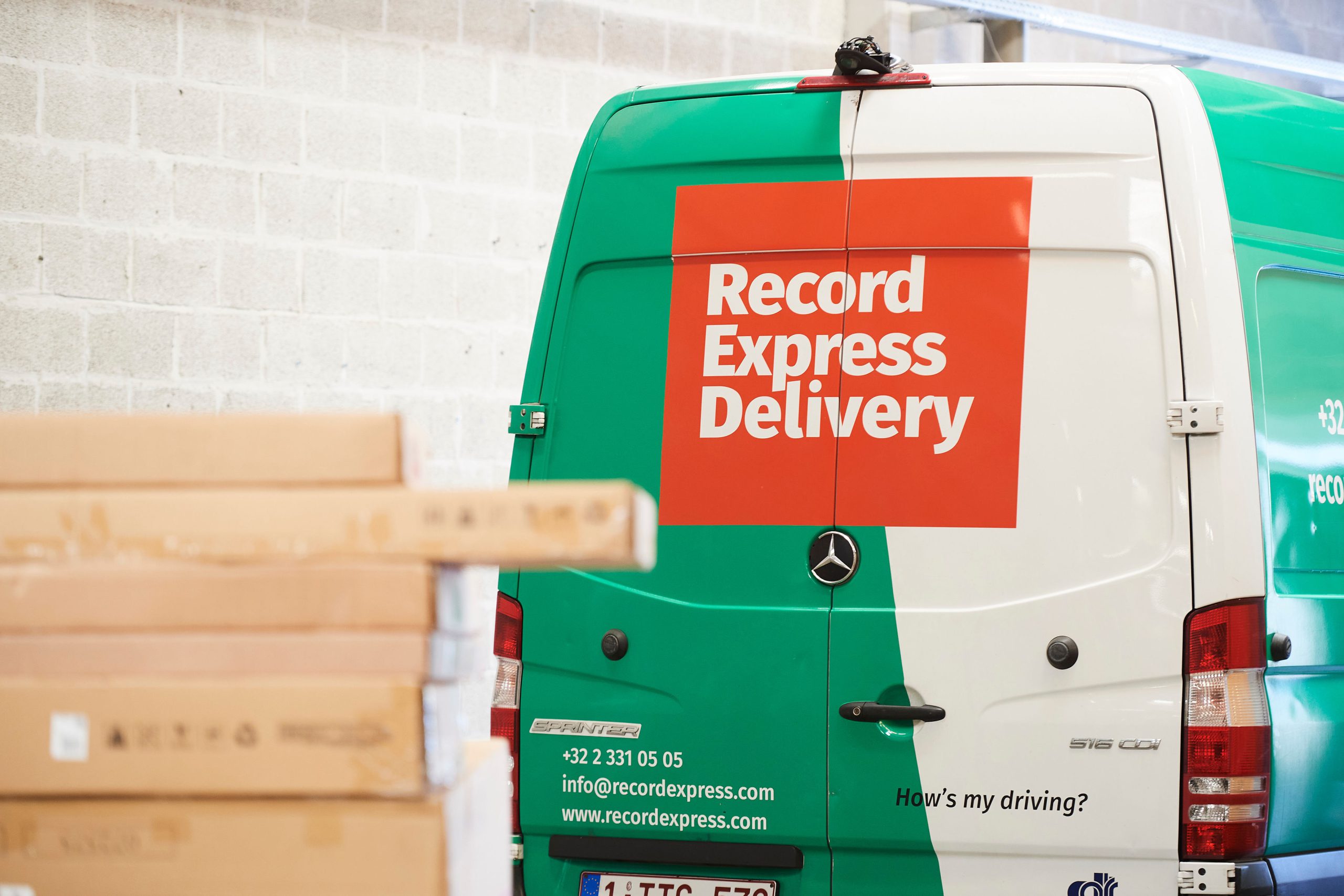
Reverse logistics for industrial equipment in Belgium is about more than just moving returns. Success means capturing faulty or end-of-life assets, routing them through compliant handling, and returning value via refurbishment, recycling, or redeployment. The essentials: dedicated reverse flows, scannable labels, cross-border customs compliance, and a partner who manages custody with proof at every step. Record Express offers dedicated reverse routes, own-fleet collection, and full Belgian/EU compliance:contentReference[oaicite:0]{index=0}:contentReference[oaicite:1]{index=1}.
Related guides:
Last-Mile Logistics in Belgium
Returns & Reverse Logistics
AI & Smart Routing
Eco-Friendly Last-Mile Options
Why does reverse logistics matter for industrial equipment in Belgium?
Direct answer: Reverse logistics keeps Belgian industry compliant and cost-efficient by turning returned or end-of-life equipment into value. It protects supply chains from downtime, avoids regulatory penalties, and recovers spare parts:contentReference[oaicite:2]{index=2}.
Industrial equipment is expensive, heavy, and often regulated. Whether a faulty CNC machine, a recalled medical device, or an end-of-life forklift battery, returns cannot be improvised. Belgian and EU rules mandate traceability, safety checks, and sometimes customs clearance. Companies that treat returns as an afterthought face delays, idle production, and fines. A structured reverse process ensures defective assets are collected safely, transported compliantly, and directed to refurbishment, recycling, or disposal. Record Express runs dedicated reverse flows with own-fleet vehicles, protecting chain of custody across Belgium:contentReference[oaicite:3]{index=3}.
- Regulatory compliance: ADR, waste, and customs requirements.
- High value recovery: spare parts, refurbishment, resale.
- Supply continuity: rapid replacement avoids costly downtime.
- Brand protection: safe, documented disposal avoids liability.
What are the key challenges of industrial reverse logistics in Belgium?
Direct answer: Oversized equipment, multi-site pickup, ADR rules, and cross-border handoffs make industrial returns more complex than parcel flows. Without structured reverse lanes, costs and risks spike:contentReference[oaicite:4]{index=4}.
Unlike retail returns, industrial items are bulky, heavy, and often hazardous. Think machine tools, compressors, or medical equipment requiring cold chain. Many Belgian firms operate multiple warehouses, so coordination across Liège, Antwerp, and Brussels hubs is essential. Add ADR constraints for batteries, chemicals, or dangerous goods, plus post-Brexit paperwork for UK flows, and reverse logistics becomes mission-critical. Record Express offers dedicated reverse capacity, multi-site pickups, and compliance expertise to smooth these flows:contentReference[oaicite:5]{index=5}.
- Bulky returns require tail-lift vehicles and two-person crews.
- ADR-certified drivers and compliant packaging are mandatory.
- Cross-border returns must clear EU customs and VAT properly.
- Multi-site collections need a central slot ledger for predictability.
Which reverse logistics models fit Belgian SMEs and corporates?
Direct answer: The three core models are: direct returns to central DC, vendor-managed returns, and third-party-managed reverse flows. Belgian corporates often mix them by product line:contentReference[oaicite:6]{index=6}.
Direct-to-DC works for high-value assets with central refurbishment. Vendor-managed returns fit leased machinery, where the OEM dictates collection and repair. Third-party reverse logistics partners handle multi-supplier and multi-site flows, ensuring custody and compliance across Belgium and the EU. Record Express runs third-party reverse programs, collecting from plants, warehouses, or clients, and directing freight to refurbishers, recyclers, or disposal partners as instructed:contentReference[oaicite:7]{index=7}.
| Model | Use Case | Notes |
|---|---|---|
| Direct-to-DC | Central refurbishment of high-value gear | Requires robust slotting and dock capacity |
| Vendor-managed | OEM-controlled equipment returns | OEM provides packaging, instructions, carrier |
| Third-party-managed | Multi-site, multi-supplier reverse programs | Record Express model: own fleet, custody, compliance |
How do compliance and sustainability shape reverse logistics choices?
Direct answer: Belgian and EU rules on waste, emissions, and safety mean reverse logistics must be both compliant and green. Choosing EVs, consolidating loads, and logging CO₂ savings is now standard in tenders:contentReference[oaicite:8]{index=8}.
Industrial returns include hazardous waste, electrical equipment, and batteries. These require ADR, WEEE, and waste compliance. At the same time, Belgium and the EU expect sustainability reporting. Record Express integrates compliance and green measures: EVs for city-core pickups, consolidated routes, and CO₂ reporting per collection. This positions reverse logistics not as a cost but as a contributor to ESG goals:contentReference[oaicite:9]{index=9}.
- ADR and WEEE compliance for regulated goods.
- Emission reduction through EVs and consolidation.
- Transparent CO₂ reporting for ESG metrics.
How does Record Express run reverse logistics programs end to end?
Direct answer: We map sites, publish SOPs, and operate with our own fleet. Clients get live ETAs, photo proof, ADR compliance, and a single accountable team across Belgium:contentReference[oaicite:10]{index=10}:contentReference[oaicite:11]{index=11}.
We start with a diagnostic of sites and return flows. We define SOPs for packaging, labeling, and slot booking. We then operate reverse lanes with dedicated vehicles, ADR drivers when needed, and full traceability. Stores and warehouses see live ETAs and receive proof of collection. Because we do not subcontract to intermediaries, chain of custody is clear, issues are resolved quickly, and compliance is demonstrable.
- Network mapping and SOP design.
- Own-fleet collections with ADR-certified drivers.
- Live tracking and photo proof of returns.
- Single point of contact for multi-site Belgian programs.
Next step: Book a reverse logistics audit. We will benchmark your return flows and pilot a compliant, green program across your sites.
FAQ
Do you collect oversized or heavy industrial returns?
Yes. We operate tail-lift vehicles and two-person crews for heavy machinery and bulky equipment:contentReference[oaicite:12]{index=12}.
Can you handle ADR-regulated returns like batteries or chemicals?
Yes. Our drivers are ADR-certified and we follow compliant packaging and documentation for dangerous goods:contentReference[oaicite:13]{index=13}.
Do you support cross-border reverse flows?
Yes. We handle customs and VAT for EU and UK reverse shipments, ensuring compliant paperwork and custody:contentReference[oaicite:14]{index=14}.
Can you report CO₂ savings from reverse flows?
Yes. We log emissions saved per collection and provide sustainability reports aligned with EU ESG frameworks:contentReference[oaicite:15]{index=15}.
Sources & Further Reading
- Record Express – Last-Mile Logistics in Belgium
- Record Express – Returns & Reverse Logistics
- Record Express – Eco-Friendly Last-Mile Options
- Record Express – AI & Smart Routing
Record Express was awarded a 59/100 score by EcoVadis, the global leader in sustainability ratings.


