
How to Estimate Your Bulky Delivery Timeline with Couriers
SEND PARCELHome / Our Business Areas / Industry /
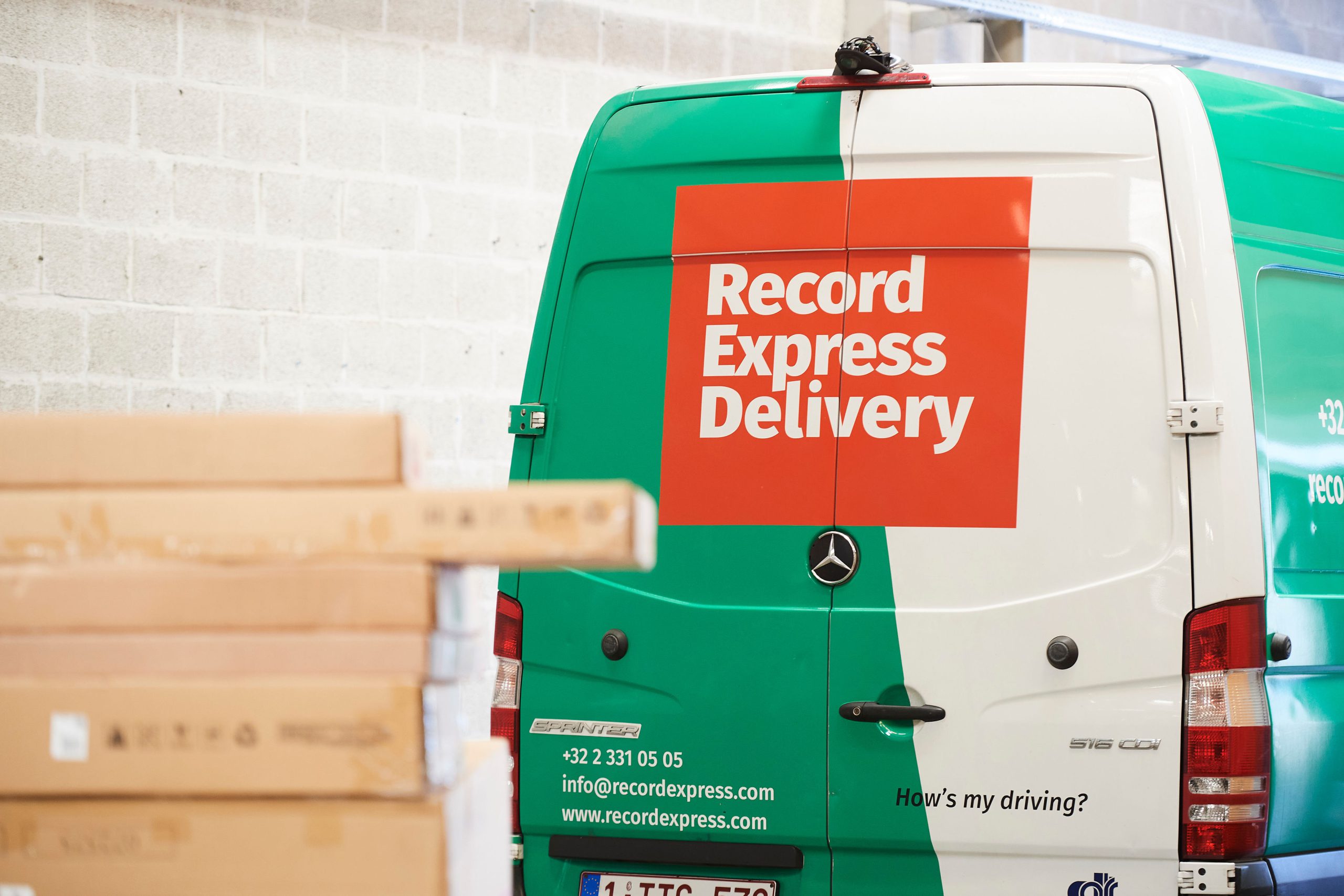
For bulky goods, timelines hinge on five inputs: departure cadence, distance and handovers, service level (e.g., white-glove), access constraints, and customer availability.
Use a simple equation—Lead time = Order cut-off alignment + Departure wait + Trunk transit + Final-mile slot—and sanity-check with first-time delivery and damage rates.
Quote a range, not a single day, unless you have a booked slot and a confirmed cut-off.
Want help building lane-by-lane SLAs? Contact Record Express.
Key figures at a glance
The quick equation for bulky delivery timelines
Bulky goods do not move like parcels. There are fewer stops per route, more handling, and often two-person delivery. Use this quick equation to estimate lead time:
Lead time =
Cut-off alignment (0–2 days) +
Departure wait (0–3 days, depends on set-day schedule) +
Trunk transit (1–3 days domestic; 2–5 days Benelux/EU) +
Final-mile slot (same/next set-day with 2–4 hr window)
If you miss the cut-off, you usually add a full day. If you do not book an appointment before trunking, add uncertainty to the final-mile slot.
Inputs that change the answer
| Input | What to check | Effect on timeline | Risk control |
|---|---|---|---|
| Order cut-off | Day/time the order joins the next departure | Miss it → +1 day (often more) | Publish cut-offs on checkout and order portal |
| Departure cadence | Set-day rounds per region (e.g., Tue/Fri) | Fewer rounds → wider SLA | Batch orders to lift frequency over time |
| Service level | Kerbside vs doorway vs white-glove | More in-home work → longer dwell | Use white-glove only for high-risk SKUs |
| Access constraints | Stairs, parking, lift size, long carry | Adds minutes/stops; delays cascade | Capture access notes/photos at booking |
| Customer availability | Booked 2–4 hr slot with SMS reminders | No slot → failed attempt → +1–3 days | Self-serve slotting + day-before reminder |
A repeatable 6-step method
- Pick the lane and service: e.g., Brussels → Antwerp, doorway two-person.
- Confirm cut-off & cadence: e.g., orders before 12:00 join Tue/Fri departures.
- Check trunk distance & handovers: direct, cross-dock, or regional hub?
- Book the appointment before trunking: customer picks a 2–4 hr window.
- Adjust for access risks: stairs/parking add buffer minutes per stop.
- Publish a range: example “2–3 working days” with slot time on the chosen day.
Worked example (domestic)
Order Monday 10:00 → makes Tue departure. Trunk same day to local hub. Final-mile van delivers Thu within 12:00–16:00 slot.
Quoted: 2–3 working days, confirmed at checkout after slot selection.
Urban vs regional timing
Urban cores (Brussels, Antwerp, Ghent) have access limits and tight parking. Vans with tail-lifts and set-day rounds keep timings honest.
Regional areas cover more kilometres per stop, so protect cut-offs and consolidate to maintain 2–4 day windows.
When to pay for speed
Use dedicated vans for deadlines, high-value installs, or recovery after a failed first attempt.
Keep express capacity ring-fenced so core rounds aren’t disrupted.
Always communicate the surcharge and the exact slot.
Build a simple SLA table your team can use
| Lane | Default SLA | Fast option | Notes |
|---|---|---|---|
| Domestic Belgium (regional) | 2–3 working days | Next-day dedicated van | Book slot before trunking |
| Domestic Belgium (nationwide) | 2–4 working days | 24–48h dedicated | Cross-dock + van rounds |
| Benelux cross-border | 2–5 working days | 48–72h dedicated | Protect cut-offs, language SMS |
Data you need at checkout to keep SLAs
- Access details: stairs, lift size, parking, floor, door width.
- Contact rules: phone and SMS opt-in for reminders.
- Service choice: kerbside, doorway, white-glove, assembly.
- Preferred days: show set-day options to guide choice.
How to communicate timelines to customers
- Show a range (e.g., “2–4 working days”) next to each service level.
- After slot selection, show the day and window (e.g., Thu, 12:00–16:00).
- Send a day-before reminder with prep guidance.
- Provide a live driver link on the day.
- Capture photo POD to close the loop.
Common pitfalls (and easy fixes)
| Pitfall | What happens | Fix |
|---|---|---|
| Vague cut-offs | Orders roll to the next departure | Publish clear times; enforce |
| No appointment before trunk | Failed delivery adds 1–3 days | Book slot at checkout or via SMS |
| Missing access notes | Long dwell; missed windows | Collect stairs/parking info up front |
| One-size service | Over-pays or under-serves SKUs | Use white-glove only where it pays back |
Starter plan (4–6 weeks)
- Baseline current days-to-deliver and first-time success by lane.
- Set two departure days per region; publish cut-offs.
- Enable self-serve slotting + SMS reminders.
- Track KPIs weekly; tighten ranges after week 3.
Need lane-specific SLAs?
We’ll build a region-by-region timetable and customer-ready promises.
Speak with our team.
FAQ
Why do bulky deliveries need appointment slots?
Because crews handle large items and access varies. Slots lift first-time success and keep routes on time.
Can we promise next-day?
Yes for selected lanes using dedicated vans. Use sparingly so set-day rounds remain efficient.
What’s the biggest cause of delays?
Missed cut-offs and missing access information. Fix both at checkout and in order confirmation emails.
How wide should our SLA range be?
Domestic: 2–4 working days is realistic for most bulky flows. Narrow it when density supports more frequent departures.
What KPIs prove our estimate is working?
First-time success ≥ 95%, on-time ≥ 95% domestic, and stable days-to-deliver by lane.

Record Express was awarded a 59/100 score by EcoVadis, the global leader in sustainability ratings.


