
Handling Dangerous or Fragile Bulky Deliveries Safely
Safe logistics for dangerous or fragile bulky deliveries in Belgium. SEND PARCELHome / Our Business Areas / Industry /
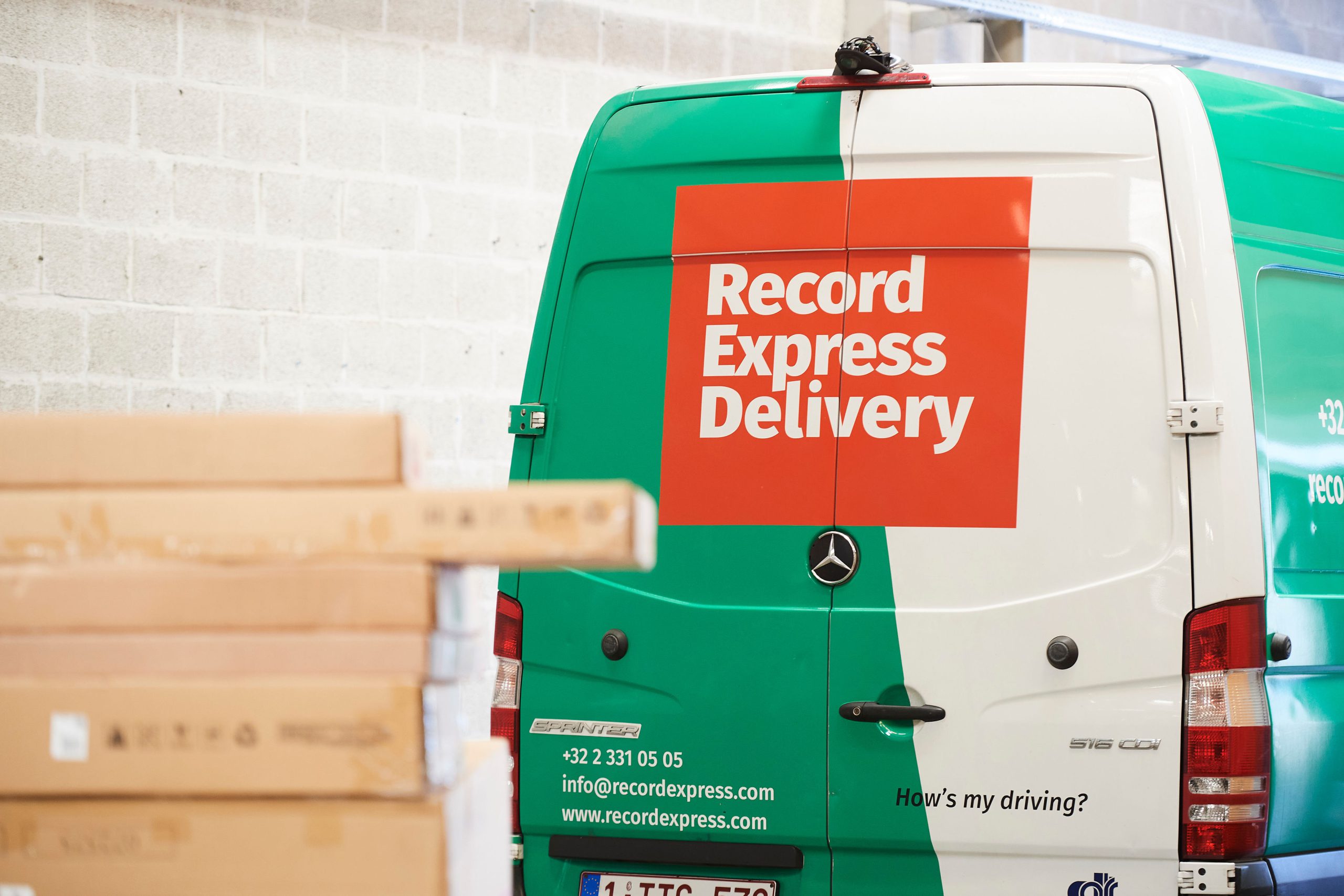
Moving dangerous or fragile bulky items in Belgium requires three things working together, compliant carriers, engineered packaging and load securing, and clear operating rules with audit evidence.
Start with a risk register and classification, apply ADR for hazardous goods and EN 12195 for cargo securing, then choose the right service model, specialist two-person delivery, temperature control, or shock-protected transport.
Measure incident rate, damage rate, and scan compliance.
Pilot on one lane for six weeks before rolling out.
Key figures at a glance
What counts as dangerous or fragile bulky freight
Dangerous bulky freight includes goods classified as hazardous under ADR, for example paints and solvents, batteries, pressurised cylinders, aerosols, adhesives, certain cleaning agents, and industrial chemicals.
Fragile bulky freight covers items that are heavy or voluminous but sensitive to shock or pressure, such as stone worktops, glass panels, medical devices, laboratory instruments, large electronics, premium furniture, and artworks in crates.
Some consignments are both, for example temperature-sensitive chemical drums with fragile glass instrumentation.
The safe plan begins with classification.
Assign each SKU a risk profile, hazardous class where relevant, gross weight and centre of gravity, temperature range, and stacking limits.
This risk register drives packaging, labels, vehicle choice, routes, and handover steps.
Legal framework and standards that apply in Belgium
Belgium follows EU rules for road transport.
For hazardous goods the European Agreement concerning the International Carriage of Dangerous Goods by Road, ADR, defines classes, packing instructions, documentation, vehicle marks, driver training, tunnel restrictions, and emergency equipment.
For cargo securing the key references are EN 12195 parts 1 to 4, plus EU 2014/47 roadside inspection rules that include cargo securing checks.
For temperature controlled health products GDP guidance applies, with evidence of calibration and temperature traceability.
Normal road rules on vehicle weights and dimensions also apply.
| Area | Reference | What you must ensure |
|---|---|---|
| Hazardous goods | ADR | Correct classification, packaging, labels, vehicle equipment, trained driver, transport document, and tunnel code compliance |
| Cargo securing | EN 12195-1 to 4, EU 2014/47 | Calculation of lashing forces, approved straps and chains, anti-slip mats, blocking and bracing, inspection evidence |
| Weights and dimensions | EU Weights & Dimensions rules | Axle limits, height and length rules, route planning for heavy vehicles |
| Temperature control | GDP guidance | Calibrated devices, temperature records, alarm management, document retention |
Add GDP elements if temperature matters.
Keep a compliance pack on every truck, transport document, SDS where relevant, and photo proof of securing.
Packaging and labelling that prevent most losses
- Crates and frames, use timber crates or steel frames for stone, glass, and machinery. Add shock sensors and tilt indicators for valuable items.
- Pallet strategy, standardise on Euro or industrial footprints, fix height limits, require no overhang and full deck boards for heavy loads.
- Internal protection, use foam inserts, edge protectors, corner posts, and honeycomb panels. Always protect centre-of-gravity points.
- Closure rules, specify film gauge, strapping width and number of wraps. Seal crates with tamper-evident fasteners.
- Labels, GS1 with SSCC on two adjacent sides, hazardous diamonds and handling pictograms where needed, human-readable SKU and weight.
- ASN and photos, send advance shipment notice including weights, dimensions, and photos of the packed unit before dispatch.
Most fragile damage claims start with poor packaging or mixed pallets.
Standardising packaging and labels reduces handling variation, speeds intake, and gives better evidence if something goes wrong.
Load securing, make EN 12195 work for you
For bulky freight the load securing plan is as important as the packaging.
The method depends on friction, weight, geometry, and vehicle bed.
Use a mix of direct lashing, tie-down with anti-slip mats, blocking with chocks and beams, and form-fit in headboards or stillages.
| Method | Use when | Notes |
|---|---|---|
| Direct lashing | High mass items like machinery and stone | Calculate required lashing capacity, use chains or high LC straps |
| Tie-down with friction aid | Palletised fragile items in crates | Use anti-slip mats and corner protectors to spread strap pressure |
| Blocking and bracing | Mixed shapes or round items | Use chocks, wedges, and cross-members against headboard |
| Form-fit | Unit loads in stillages | Fill voids with dunnage bags, check frames are rated |
Keep a simple worksheet that records friction assumptions, strap numbers, and anchor points.
Take photos after securing and store with the transport record.
Drivers should recheck straps after the first ten kilometres and at set intervals.
Choosing the right service model
| Model | Best for | Pros | Watch-outs |
|---|---|---|---|
| Specialist ADR carrier | Hazardous bulky items, drums, cylinders | Trained drivers, equipped vehicles, compliance evidence | Higher base rate, strict cut-offs |
| White-glove two-person delivery | Fragile premium furniture, glass, instruments | Room-of-choice, assembly, fewer damages | Bookable slots needed, longer dwell at stop |
| Temperature-controlled carrier | Heat sensitive chemicals and devices | Live temperature data, GDP processes | Calibration and device maintenance |
| Escort or crane-assisted delivery | Oversize machinery, fragile panels to upper floors | Safe lifts, fewer handling stages | Permits, traffic management, weather risks |
Many shippers use hybrid plans, ADR trunk to a regional hub, then white-glove final mile for fragile placement.
Design the handover with scans and photos to preserve chain of custody.
Operating rules that reduce risk every day
- Pre-dispatch checks, classification, packaging sign-off, labels visible, documents complete.
- Driver brief, load plan, securing photos, route restrictions, tunnel codes, customer access limits.
- Customer site readiness, slot booking, lift availability, floor protection, PPE, and contact names.
- Evidence, full scan chain, photo at loading, photo at delivery before unsecuring, electronic POD with notes.
- Exception rules, what to do if labels are wrong, packaging is damaged, or route is blocked.
Fast decisions prevent small risks from becoming incidents.
Incident response and insurance
Incidents are rare but must be rehearsed.
For ADR events the driver must secure the area, contact emergency services if needed, and follow the transport emergency card.
For damage to fragile goods the priority is safety, then evidence, photos from multiple angles, packaging kept for inspection, and immediate notification to the control tower.
Insurance cover depends on declared value and Incoterms, agree this upfront.
Keep claims files complete, transport document, photos, proof of value, and inspection reports.
Roles and responsibilities
| Task | Shipper | Carrier | Consignee |
|---|---|---|---|
| Classification and SDS | Responsible | Informed | Informed |
| Packaging and labels | Responsible | Verify visible compliance | Report issues |
| Load securing | Co-responsible if loading | Responsible if loading, always responsible for safe transport | Provide safe access |
| Documents and scan chain | Issue and retain | Carry and update | Confirm and store POD |
KPIs and audit evidence
| KPI | Target | How to calculate | Evidence to keep |
|---|---|---|---|
| Incident rate | ≤ 0.2% ADR shipments | Incidents over total ADR consignments | Incident forms, photos, corrective actions |
| Damage rate | ≤ 1.0% fragile bulky | Claims over consignments | Packaging spec, securing photos, POD notes |
| Scan compliance | ≥ 99% | Events recorded over events planned | Event logs and time stamps |
| On-time delivery | ≥ 97% | Delivered within booked slot | TMS reports and slot bookings |
Six-week starter plan for Belgium
- Week 1, build a risk register by SKU, classify ADR, temperature, fragility, and weight.
- Week 2, write a one-page SOP per risk class, packaging, labels, securing, scans, and documents.
- Week 3, select carriers, ADR specialist, white-glove, and temperature control, and agree evidence formats.
- Week 4, train warehouse and drivers, run a table-top incident drill, and publish contact trees.
- Week 5, go live on one lane with daily KPI checks and photo audits.
- Week 6, review results, fix issues, and plan rollout to adjacent lanes.
Need support?
Record Express can supply ADR-trained carriers, white-glove final mile, and compliance documentation packs. Speak to our team.
FAQ
Do we need ADR if goods are only consumer quantities?
Some items qualify for limited quantity exemptions, but you still need correct marks and documents. Always confirm with the SDS and ADR tables.
Can fragile and hazardous items travel together?
Yes, if compatibility rules are respected and the securing plan prevents impact. Separate streams where regulations or risk assessment require it.
What proof should we keep for audits?
Transport document, packaging spec, securing photos, driver training records, temperature logs if relevant, and electronic POD with notes.
How can we cut damage on stone and glass?
Use rigid frames, edge protectors, anti-slip mats, direct lashing, and two-person delivery with floor protection at the site.
What are typical extra charges to plan for?
Tunnel restrictions and diversions, tail-lift use, waiting time at sites, two-person crews, out-of-hours delivery, and crane hire where needed.
Sources & Further Reading
- UNECE ADR, European Agreement concerning the International Carriage of Dangerous Goods by Road
- European Commission, Weights and Dimensions rules
- EU Directive 2014/47, Roadside inspections including cargo securing
- FPS Economy Belgium, Road Transport guidance
- EN 12195-1, Load restraint on road vehicles
- EU GDP Guidelines for medicinal products
Record Express was awarded a 59/100 score by EcoVadis, the global leader in sustainability ratings.


