
Why B2B Logistics Requires Different Insurance than Consumer Deliveries
Why B2B freight logistics require specialised insurance in Belgium. SEND PARCELHome / Our Business Areas / Industry /
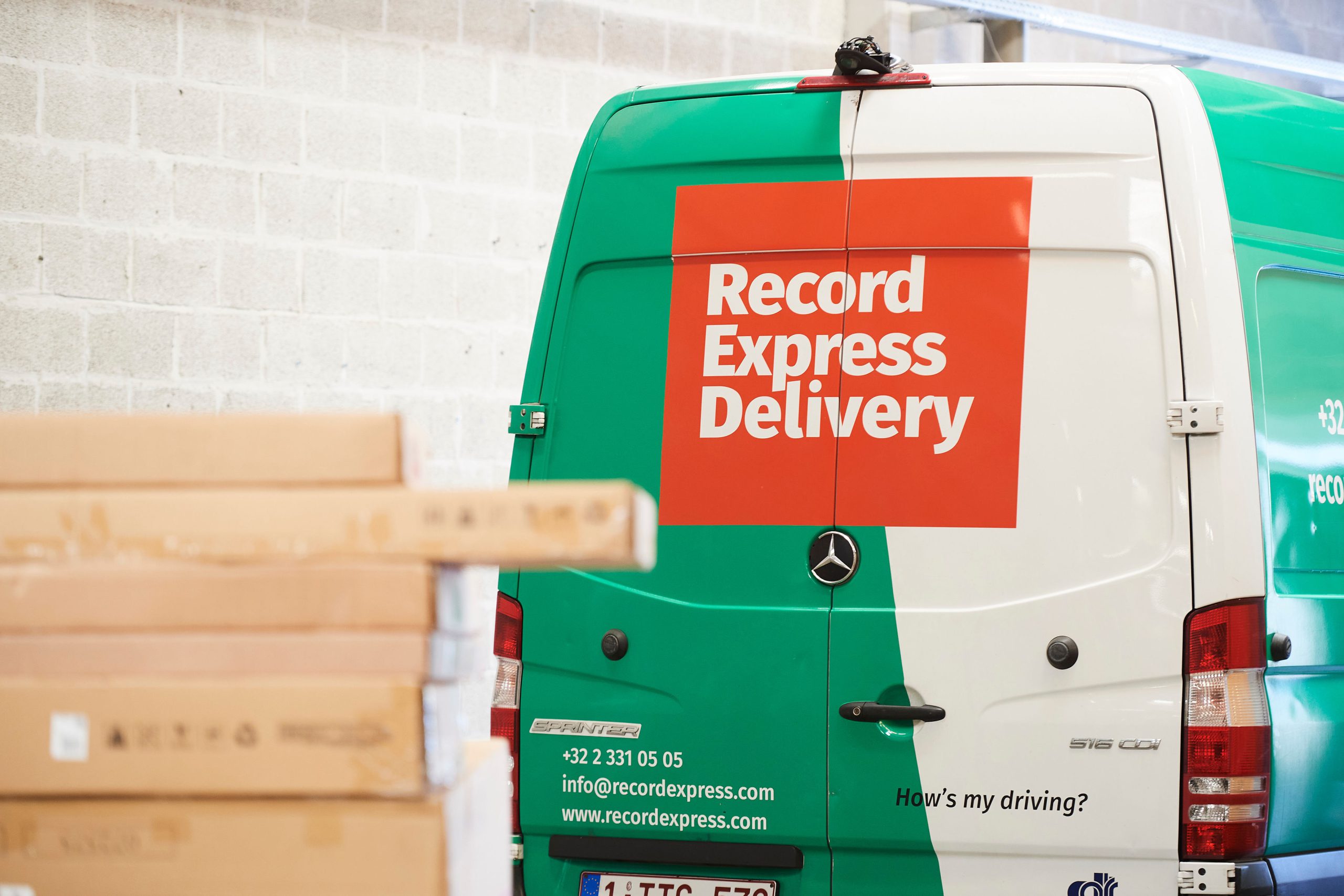
B2B logistics moves high-value goods under tight SLAs, contractual penalties, and complex handovers. That risk profile is nothing like consumer parcel delivery.
Belgian businesses need insurance that matches commercial exposures: carrier liability compliant with CMR, transit “all-risks” for the shipper’s interest, warehouseman’s liability during storage, public liability at loading/unloading, and—crucially—endorsements covering delays, project sites, temperature excursions, and high-value machinery.
Record Express aligns policy structure with contracts so coverage follows the real risk, not a parcel template.
Why isn’t consumer-delivery insurance enough for B2B freight?
Direct answer: B2C insurance assumes low item value, simple handoffs, and minimal contractual penalties. B2B freight introduces high values, multi-actor sites, equipment-assisted handling, and contractually binding SLAs—so the exposure is higher and different.
Consumer parcel schemes focus on loss or damage to relatively small goods with standardised limits. In B2B, a single consignment may be worth tens or hundreds of thousands of euros; it might require forklifts, cranes, or qualified crews; and it often delivers into live warehouses, production lines, or construction projects. Missed slots can trigger liquidated damages. Post-delivery disputes may involve serial numbers, calibration records, or software licenses. Insurance has to follow that complexity: it must consider where the risk transfers, who bears it at each handoff, and which policy responds when. That is why Belgian shippers and carriers rely on a stack of policies and endorsements rather than a “parcel plus” cover.
How do B2B risks differ from consumer risks—concretely?
Direct answer: B2B adds contractual liability, higher cargo values, specialist handling, and site hazards. Each increases the chance and cost of a claim.
In commercial flows you’ll meet forklift collisions, racking strikes, tail-lift accidents, theft from parked trailer yards, and temperature excursions on perishables or pharma. You’ll also face “soft costs” like project delays when time-critical components miss a crane slot. Finally, because B2B chains have more parties—shipper, forwarder, carrier, subcontractor, warehouse, installer—verifying custody and responsibility becomes a documentation exercise, not guesswork. Insurance must reflect all of this, otherwise gaps appear at exactly the wrong moment.
| Dimension | B2C parcel | B2B freight | Insurance implication |
|---|---|---|---|
| Typical value | Low/medium | High; single-shipment concentration | Higher limits; declared value |
| Handling | Manual, small parcel | Forklifts, cranes, MHE | Public liability + load/unload cover |
| Sites | Homes, shops | Warehouses, plants, sites | Warehouseman’s and site-specific requirements |
| Contracts | Standard T&Cs | SLAs, LDs, hold-harmless clauses | Contractual liability checks and endorsements |
| Documentation | Basic POD | CMR, pallet counts, serials, ePOD photos | Evidence to defend or settle claims |
Which policies make up a proper B2B insurance stack in Belgium?
Direct answer: Carrier liability under CMR, cargo “all-risks” (shipper’s interest), public liability, employer’s liability, warehouseman’s liability, and—where contracts require—professional indemnity/E&O and contingent cargo for subcontracted legs.
Think of the stack as overlapping safety nets. CMR liability (for international road carriage and widely used as a standard in Belgium) sets the carrier’s liability framework and monetary limits per kilogram. Shippers who can’t tolerate that limit often buy their own transit “all-risks” on Institute Cargo Clauses to protect full value. Public liability covers third-party property damage during loading/unloading (dock doors, racking, neighbour’s car). Employer’s liability protects workers. Warehouseman’s liability covers goods in storage, including fire/water risks. When complex SLAs or project management is involved, professional indemnity addresses errors in coordination or documentation. If you subcontract, contingent cargo ensures the prime contractor still has protection if a sub’s policy fails. The right blend depends on your contracts, values, and lanes—not a one-size box.
| Policy | Protects against | When it responds | Common gap it closes |
|---|---|---|---|
| CMR carrier liability | Carrier’s legal liability | Loss/damage in carriage | Defines liability & limits per kg |
| Transit “all-risks” (shipper) | Physical loss/damage to full value | Regardless of carrier liability | Value above CMR limit |
| Public liability | Third-party property & injury | Load/unload, on-site movements | Dock/warehouse damage claims |
| Warehouseman’s liability | Goods during storage | Fire, water, theft in custody | Non-transit exposure between legs |
| Professional indemnity | Coordination/document errors | SLA, planning, documentation faults | Contractual service failure |
| Contingent cargo | Subcontractor failure | Sub’s policy invalid/insufficient | Prime still covered |
How do contracts and Incoterms change who carries the risk?
Direct answer: Contracts dictate when risk transfers and what liabilities exist beyond statutory rules. Incoterms define who insures and when, but your bespoke SLA can add penalties or wider obligations.
A Belgian shipper delivering DDP or DAP may be responsible for insurance up to the consignee’s site, including local handling. Conversely, EXW places more responsibility on the buyer. SLAs stack on top: liquidated damages for late arrival, specified proof requirements (serials, photos), or waivers of subrogation. If you sign those without aligning your insurance, you accept risks your policies may not honour. Always map obligations against the insurance stack and seek endorsements where needed—especially for delay penalties, set-up/commissioning responsibilities, or “hold harmless” clauses that expand your liability to others’ mistakes.
Why do limits, valuations, and deductibles matter so much?
Direct answer: Because B2B claims can exceed statutory liability easily. You need declared values, correct limits per vehicle/location, and deductibles that fit your risk appetite.
Under carrier liability frameworks, recovery may be limited by weight-based formulas, which can be far below actual cargo value. Shippers protect the difference with transit “all-risks” and declared values. Carriers protect themselves with correct aggregate limits and per-vehicle limits that match the most valuable loads they carry. Deductibles (excess) should be high enough to keep premiums sensible but not so high that small but frequent incidents strain cash flow. If you store goods, confirm location limits match the peak value in your warehouse, not the average day. For project cargo, use per-project aggregates so one incident doesn’t consume the programme’s capacity.
| Area | Question | What “good” looks like |
|---|---|---|
| Declared values | Are high-value loads declared? | Declared and evidenced on docs |
| Per-vehicle limit | Does it match cargo value? | Limit ≥ max load value |
| Warehouse limit | Peak stock covered? | Location limit ≥ peak exposure |
| Deductible | Affordable and rational? | Aligned to incident frequency |
Which special categories need extra attention?
Direct answer: High-value machinery, temperature-controlled goods, fragile/high-polish surfaces, trade-show/demo equipment, and cross-dock freight with multiple handlers.
Machinery often requires coverage during loading/unloading and inside facilities—where most incidents occur. Temperature-controlled shipments need wording for spoilage due to equipment failure or delays, not just crash damage. Fragile or high-gloss items demand stricter packing clauses; insurers may require photos pre-transit. Trade-show and demo gear faces concentrated risk windows and theft exposure. Cross-dock freight can create attribution disputes; insist on scan events and photo evidence at every handoff. If a shipment spans international borders, verify that insurance and liability terms hold across jurisdictions and subcontracted legs.
| Cargo type | Typical risk | Policy/endorsement focus |
|---|---|---|
| High-value machinery | Load/unload impacts | Public liability + higher limits |
| Temperature-controlled | Spoilage from delay/failure | Temperature deviation cover |
| High-gloss finishes | Surface scuffs | Packing clauses; photo evidence |
| Trade-show/demo | Concentrated theft risk | Extended “exhibition” wording |
| Cross-dock multi-handler | Attribution disputes | Scan/photo at each handoff |
What claim documentation keeps settlements fast and fair?
Direct answer: Clean consignment records, reservation notes on delivery, photo evidence at all touchpoints, and quick notification within policy timelines.
Claims slow down when documents don’t match or when no reservation is made at delivery despite visible damage. Standardise loading photos (before door close), arrival photos (before unwrapping where possible), serial captures, and reservation notes on the delivery record for any discrepancy. Notify insurers within the time windows in your policy wording. Keep invoices, repair quotes, and independent assessments ready for high-value items. When subcontractors are involved, capture their policy certificates and incorporate them into the claim pack. Tight documentation shortens cycle time and protects customer relationships.
| Document | Purpose | Best practice |
|---|---|---|
| CMR/consignment note | Legal carriage record | Accurate counts; signatures |
| Reservation note | Preserve rights | State visible damage precisely |
| Photo set | Condition proof | Pickup/cross-dock/delivery |
| Serial/asset list | Identify units | Link to ePOD |
| Invoice/repair quote | Quantify loss | Independent assessment for high value |
How do you control premium spend without increasing net risk?
Direct answer: Raise deductibles tactically, reduce claim frequency with prevention standards, and buy limits where the tail risk sits.
In B2B, most cost comes from a few large claims or many small avoidable ones. Tackle both. Introduce loading/strapping standards, forklift speed limits, and “stop word” safety protocols to cut incident frequency. Use declared values and only buy higher limits for lanes and customers that need them. For storage, match location limits to real peak exposure and improve fire/security controls to earn better rates. Finally, measure claims per € million of cargo moved—this normalises improvement across growth and provides a clear discussion with underwriters at renewal.
| Lever | Mechanism | Expected effect |
|---|---|---|
| Higher deductible | Absorb small losses | Lower premium, stable net |
| Prevention standards | Fewer incidents | Premium stability + fewer hidden costs |
| Targeted limits | Buy cover where needed | Reduce waste on low-risk lanes |
How does Record Express align operations and insurance in practice?
Direct answer: We design workflows and documentation to match policy triggers: photo-verified handovers, reservation notes for visible variances, and custody evidence through every leg.
Our teams operate with ePOD, photo before door-close, arrival photos, and serial capture for high-value goods. We stage by sequence to reduce touches and damage probability; we coordinate booked bays and safe handling inside warehouses and plants; and we communicate driver details and ETAs so customers can prepare. On the insurance side, we carry the appropriate liability stack and maintain certificates for customer or site audits. When subcontractors are used, we verify their cover and keep contingent cargo in place. The result is faster settlement when incidents happen—and fewer incidents in the first place.
Talk to Record Express about aligning contracts, cover, and workflows for Belgian commercial freight.
FAQ
Is CMR liability enough on its own?
Often not. CMR sets liability and limits per kilogram; shippers typically add transit “all-risks” to protect full cargo value.
Do I need public liability if I already have cargo insurance?
Yes. Cargo covers the goods; public liability covers third-party property or injury during loading/unloading and on-site moves.
We use subcontractors—am I still covered?
Verify the sub’s policy and keep contingent cargo in place so the prime contract remains protected if the sub’s cover fails.
Sources & Further Reading
- Record Express — Office Relocation Insurance
- Record Express — Warehouse-to-Site Logistics
- Record Express — Industrial Last-Mile
Record Express was awarded a 59/100 score by EcoVadis, the global leader in sustainability ratings.

