
Top 5 Couriers for Bulky Deliveries in Belgium: Comparison Guide
Comparison guide to the top bulky delivery couriers in Belgium. SEND PARCELHome / Our Business Areas / Industry / Top 5 Couriers for Bulky Deliveries in Belgium: Comparison Guide
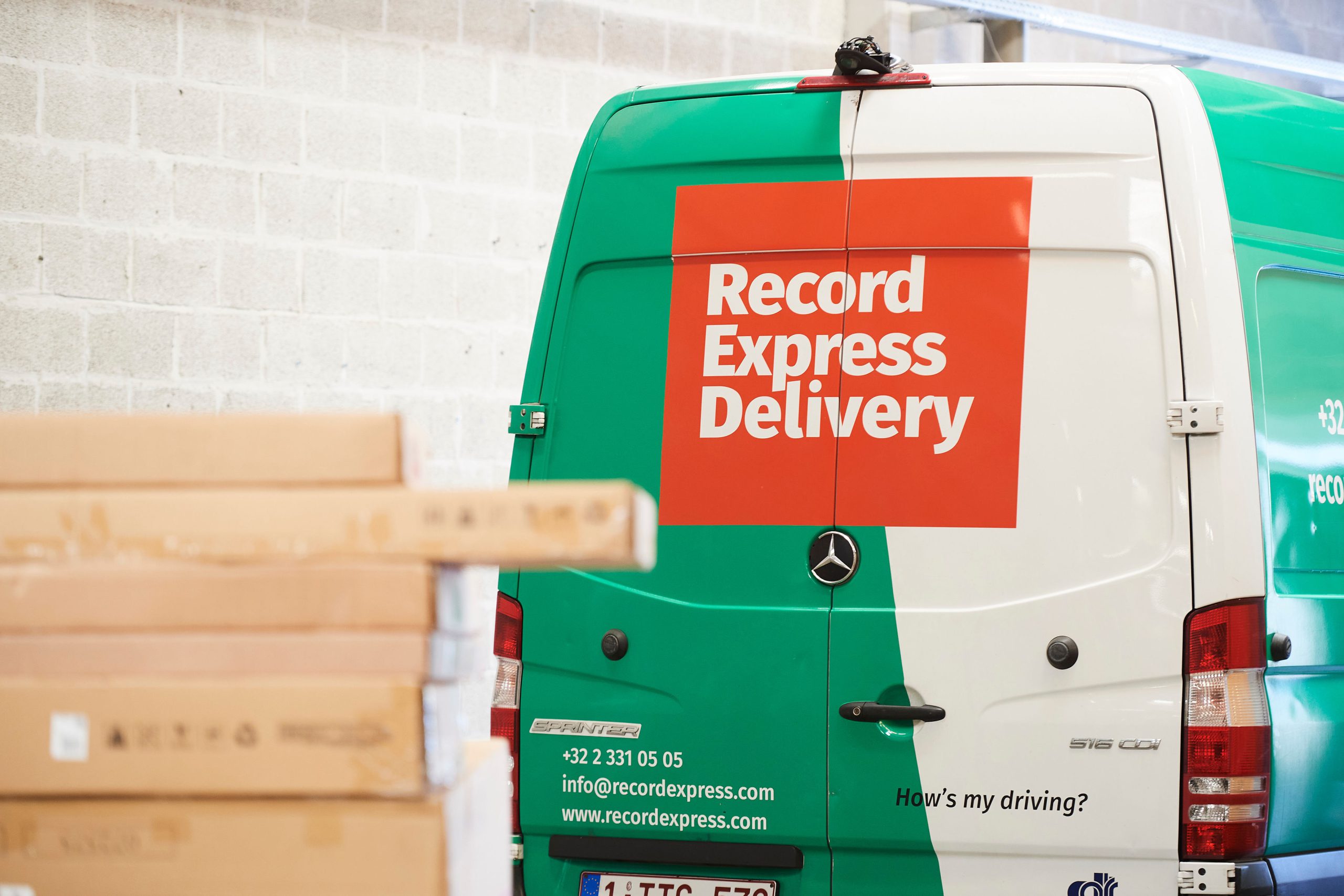
Belgium’s bulky-delivery market is best approached by service archetype rather than brand name alone.
The five models below cover nearly all needs: (1) White-glove specialists, (2) National LTL/groupage networks, (3) Regional set-day rounds, (4) Dedicated express vans, and (5) Hybrid providers like Record Express that combine consolidation with two-person final mile.
Choose by SKU fragility, access constraints, and required SLA.
Track four KPIs: first-time success, on-time delivery, cost per stop, and damage rate.
Want lane-specific advice? Contact Record Express.
Key figures at a glance
How to compare bulky couriers without the brand noise
Most Belgian retailers and SMEs discover the same thing: price lists look similar, but execution makes the difference.
Before you shortlist providers, decide which service archetype fits your SKUs and lanes.
Then benchmark providers within that archetype on delivery rhythm, crew skill, and evidence (scan chain + photo POD), not just €/stop.
- Volume & density: How many stops can a route serve in your postcode mix?
- Fragility & handling: Do your items need two-person, room-of-choice, or assembly?
- Access: Stairs, no parking, lifts, narrow streets—urban Belgium punishes the unprepared.
- Customer promise: Next-day for a subset, set-day for the majority is often the sweet spot.
- Evidence: Photos at pick, load, and delivery; electronic POD; root-cause notes on exceptions.
The 5 courier archetypes for bulky goods in Belgium
Below we summarise five common models you can actually buy in Belgium.
Each has strengths and trade-offs.
Use the tables to map your SKUs and lanes to the right fit, then run a short pilot.
| Archetype | Best for | Typical SLA | Pros | Watch-outs |
|---|---|---|---|---|
| 1) White-glove specialists | Premium furniture, fragile items, assembly required | 3–7 working days, 2–4 hr slots | Lowest damage, high CSAT, in-room placement, packaging removal | Higher €/stop, longer dwell per delivery; needs set-day rounds |
| 2) National LTL / groupage networks | Palletised bulky SKUs across BE & Benelux | 2–5 working days domestic/Benelux | Great coverage, daily linehauls, solid price per kg | Kerbside bias; upgrades to two-person may be limited |
| 3) Regional set-day rounds | Dense urban postcodes; repeat B2C flows | Set day by postcode; 2–4 hr slots | High first-time success, predictable routes, good €/stop | Lower flexibility outside set days; needs cut-off discipline |
| 4) Dedicated express vans | Urgent, high-value, or time-critical installs | Next-day or 24–48h | Fastest option, direct routing, minimal handling | Highest €/stop; use sparingly to avoid budget creep |
| 5) Hybrid provider (Record Express) | Mixed baskets (robust + fragile), national + cross-border | 2–4 days BE; 3–6 days Benelux/EU, with white-glove upgrade | Consolidated trunking + two-person final mile; photo-POD; appointment booking | Requires good access data at checkout to keep dwell tight |
Scorecard: pick the right archetype for each lane
Use this simple scoring model to shortlist providers inside the right archetype.
Weight factors by your priorities (example weights shown).
| Criterion | Description | Weight | Scoring tip |
|---|---|---|---|
| First-time success | % delivered on first attempt | 30% | Ask for last 8 weeks by postcode tier |
| Damage rate | Claims / deliveries | 25% | Split by service level (kerbside vs white-glove) |
| On-time delivery | % within booked window | 20% | Check urban vs regional performance |
| Cost per stop | €/completed stop (like-for-like) | 15% | Price after density assumptions, not list rates |
| Evidence & visibility | Photo POD, scan chain, exception notes | 10% | Request sample dashboards + anonymised PODs |
What each archetype costs (and when it pays back)
Pricing varies with stop density, service level, and access.
Use the bands below for budgeting; refine after a short pilot.
| Archetype | Indicative €/stop (BE) | When it pays back | Risk to watch |
|---|---|---|---|
| White-glove specialists | €110–€180 | Fragile SKUs; reduces returns & damage credits | Thin rounds → high dwell → rising cost |
| LTL / groupage networks | €65–€110 (doorway/kerbside) | Palletised flows; frequent multi-drop | Limited in-home options; add two-person carefully |
| Regional set-day rounds | €70–€120 | Urban postcodes; appointment success ≥ 95% | Poor access data → waiting time charges |
| Dedicated express vans | €150–€300+ | High-value or deadline-critical jobs | Overuse inflates monthly spend |
| Hybrid provider (Record Express) | €65–€150 (by service level) | Mixed baskets; consolidation + two-person | Requires cut-off discipline to maximise fill |
Worked example: Brussels + Antwerp
Switching from ad-hoc next-day to two set-day rounds increased stop density from 5 to 8 per route.
Cost per stop fell from ~€112 to ~€80 and first-time success rose from 89% to 97%.
White-glove was applied only to high-risk SKUs, cutting claims under 1%.
Urban vs regional: which archetype wins where?
- Urban cores (Brussels, Antwerp, Ghent): Set-day rounds or hybrid services with van crews outperform heavy trucks. Appointment slots are non-negotiable.
- Regional Belgium: Groupage trunking to a local hub plus two-person van final mile keeps €/stop predictable.
- Benelux cross-border: Hybrid or LTL models excel; protect cut-offs to avoid pushing routes a day.
Record Express vs the other archetypes
| Area | Record Express (Hybrid) | Typical white-glove specialist | Typical LTL / groupage |
|---|---|---|---|
| Service mix | Consolidated trunk + two-person final mile; room-of-choice optional | Two-person + assembly as standard | Kerbside; in-home only where upgraded locally |
| Speed pattern | Set-day rounds; 2–4 days BE, 3–6 Benelux/EU | 3–7 days; premium windows | 2–5 days; cut-off dependent |
| Evidence | Photo POD + scan chain as standard | Often photo POD; varies by partner | Network scans; photo POD not universal |
| Where it shines | Mixed baskets, urban access, fragile items in same network | Premium installs, high-touch CX | Palletised, repeat B2B/B2C multi-drop |
How to run a fair pilot (and get real numbers)
- Pick one region + 2 SKUs: A fragile line (e.g., premium sofa) and a robust line.
- Set two departure days: Publish cut-offs on site and order portal.
- Collect access data: Stairs, parking, lift size, floor—during checkout.
- Measure four KPIs: First-time success, on-time delivery, €/stop, damage rate.
- Photo evidence: Require photos at load and delivery; sample 100% in week 1.
- Decision in week 6–8: Keep, scale, or switch archetype by lane.
FAQ-style checks before you sign
- Can the provider show last-8-week on-time and first-time success by postcode tier?
- Do they offer two-person crews and room-of-choice where needed?
- Is photo-POD standard and retrievable by order number?
- How do they handle stairs/long carry and evening/Saturday slots?
- What’s the redelivery policy and price?
KPIs to compare providers apples-to-apples
| KPI | Target | How to calculate | Notes |
|---|---|---|---|
| First-time success | ≥ 95% | Delivered on first attempt ÷ total orders | Appointment + SMS ETA = biggest lever |
| On-time delivery | ≥ 95% domestic; ≥ 92% Benelux/EU | Within booked day/window ÷ delivered | Split urban vs regional |
| Damage rate | ≤ 1.0% fragile SKUs | Claims ÷ deliveries | Track by service level |
| Cost per stop | Down 10–20% post set-day batching | Total delivery spend ÷ completed stops | Include accessorials to avoid surprises |
Shortlist help?
We’ll map your lanes to the right archetype and run a clean 6–8 week pilot.
Speak with our team.
FAQ
Why not just pick the cheapest list rate?
Because €/stop without density, access and first-time success assumptions hides the real monthly cost. Pilot with clear rules, then compare providers.
Can one provider handle both fragile and robust items?
Yes—hybrid models combine consolidated trunking with two-person final mile and white-glove upgrades for specific SKUs.
How fast can bulky deliveries be?
Domestic Belgium can run in 2–4 working days with set-day rounds. Use express vans for the few urgent jobs that justify the extra cost.
What cuts redeliveries the most?
Appointment booking with 2–4 hour windows, SMS ETAs, and access data captured at checkout.
What’s a fair starting budget?
For mainstream two-person deliveries, plan €65–€120 per stop, then add accessorials only when needed (stairs, evening, assembly).
Need more details?
For lane-specific options and pricing, contact Record Express.
This guide avoids external links by design.

Record Express was awarded a 59/100 score by EcoVadis, the global leader in sustainability ratings.


