
Green Freight Delivery Solutions: Cutting CO2 in Heavy Logistics
SEND PARCELHome / Our Business Areas / Industry / Green Freight Delivery Solutions: Cutting CO2 in Heavy Logistics
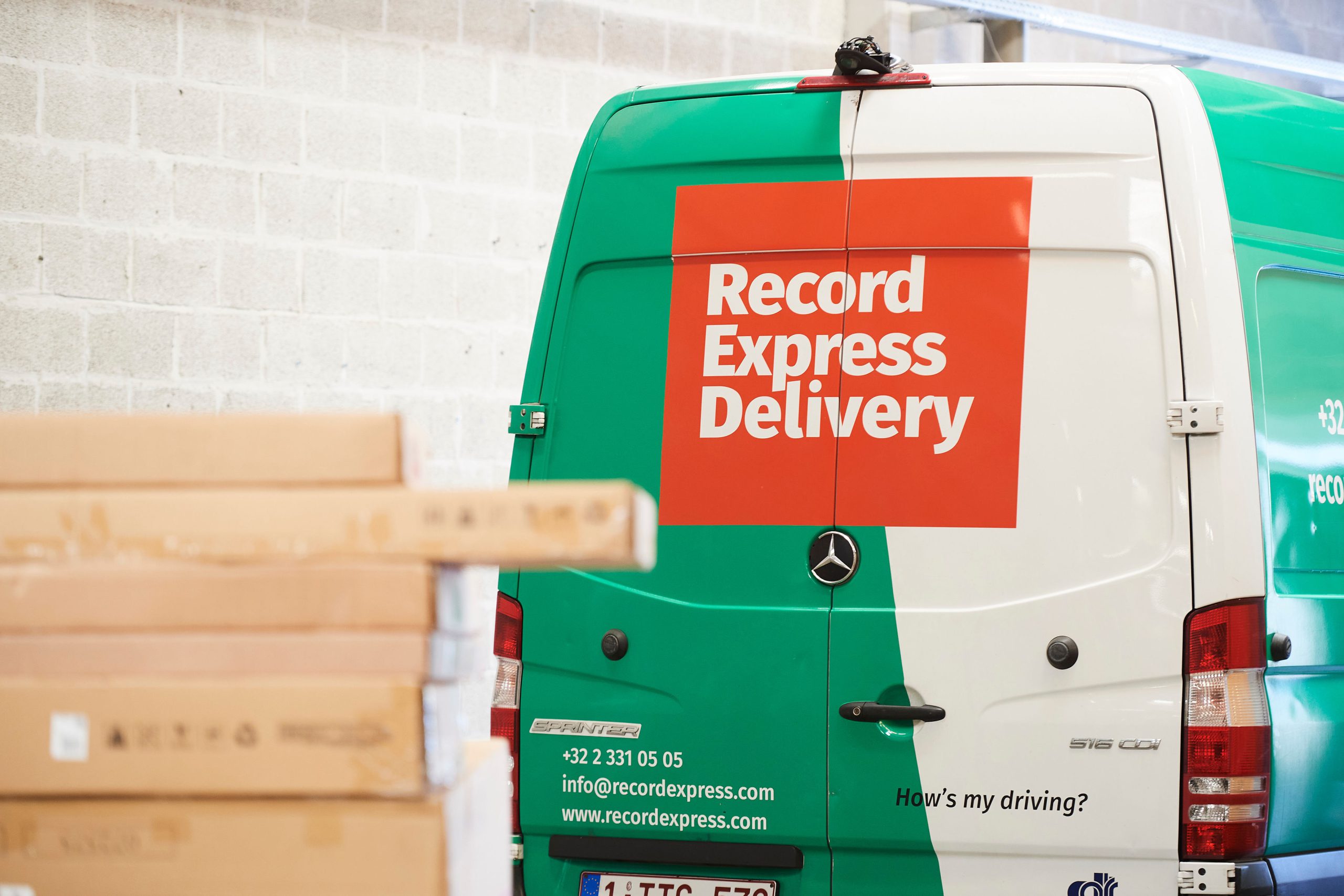
Belgian freight operators can cut CO₂ by upgrading to Euro VI and EV vehicles in cities, optimising loads and loops to avoid empty kilometres, using intermodal rail/short-sea for longer lanes, and reporting emissions per pallet. Record Express blends cleaner vehicles, AI routing, and transparent CO₂ dashboards so clients lower cost and meet EU Green Deal expectations.
Jump to: Why freight must go green · Cleaner vehicles · AI routing · Rail & short-sea · Packaging & reverse · CO₂ reporting · Record Express role
Why must heavy logistics in Belgium cut CO₂ now?
Direct answer: The EU’s climate strategy targets deep cuts in transport emissions by 2050. Belgium’s low-emission zones (LEZ) and rising disclosure demands make greener freight a commercial necessity. Acting early reduces fines and wins tenders while cutting fuel and maintenance costs.
Transport accounts for a large share of EU greenhouse gases, and freight is a core contributor. Under the European Green Deal and related policies, operators face a mix of incentives and constraints to decarbonise. In Belgium, camera-enforced LEZ rules in Brussels, Antwerp, and Ghent restrict older diesels. Meanwhile, corporate buyers increasingly require CO₂ transparency in RFPs. Green logistics isn’t just an ESG checkbox: it improves access in city cores, stabilises cost exposure to fuel swings, and differentiates your brand in competitive bids.
- EU policy direction: deep transport emission cuts toward 2050.
- LEZ enforcement: automatic plate recognition and fines for non-compliance.
- Procurement shift: tenders weighting CO₂ alongside price and on-time.
- Operational upside: less idling, fewer re-attempts, lower fuel per stop.
Which cleaner vehicle choices reduce freight emissions fastest?
Direct answer: Prioritise Euro VI across the fleet, deploy electric vans and medium rigids for city loops, and use LNG or HVO where EV range or payload is a constraint. Match vehicle to lane length, payload, and zone rules.
You don’t have to electrify everything at once to cut emissions. The biggest, fastest gains come from phasing out old diesel units and assigning the cleanest vehicles to the most sensitive areas. EV vans excel on inner-city loops under 200 km a day. Euro VI rigids remain efficient workhorses for mixed suburban routes. For longer corridors or heavy payloads, LNG or drop-in HVO biofuel options can bridge the gap while EV heavy trucks scale. The guiding rule: the smallest compliant vehicle that can safely carry the load and reach the address with time to spare.
| Vehicle | Best for | CO₂ impact | Operational notes |
|---|---|---|---|
| Electric van / 3.5t box | Urban loops & LEZ cores | Zero tailpipe CO₂ | Plan charging with dock time |
| Euro VI rigid (7.5–12t) | Regional mixed routes | Much cleaner than legacy Euro IV/V | Ideal for Belgian rings |
| LNG tractor | Heavier corridors | Lower CO₂ vs diesel | Check refuelling points |
| HVO biofuel | Drop-in decarb | Up to major reductions | Verify OEM approval |
How can AI-assisted routing cut CO₂ per pallet without hurting service?
Direct answer: Smart routing clusters stops to reduce empty kilometres, staggers dock arrivals to cut idling, and assigns green vehicles to LEZ jobs by default. Expect 10–20% CO₂ reduction per pallet alongside higher on-time rates.
Routing is where sustainability meets operations. By sequencing loops to avoid backtracking across bridges and ring roads and by building legal rest and dock windows into the plan, you shrink idle time and kilometres travelled. When upstream suppliers slip, dynamic resequencing protects the rest of the day instead of cascading misses. Matching job attributes (time window, access, weight) to the right vehicle—EV for city, rigid for ring runs—turns a green target into a daily habit. The side effect is fewer re-attempts and better customer scores.
- Cluster by area and window; avoid zig-zagging rings and rivers.
- Use live ETAs to coordinate gate release and keep engines off.
- Auto-assign LEZ-eligible vehicles to inner-city drops.
- Measure km per successful stop as the core efficiency KPI.
Can rail and short-sea really lower Belgian freight emissions?
Direct answer: Yes. Intermodal rail and short-sea dramatically reduce emissions for longer lanes, especially steady, heavy flows. Pair them with city-compliant trucks for the first and last mile.
Belgium’s rail hubs and ports connect dense industrial corridors across Benelux and into Germany, France, and the UK. For predictable lanes beyond ~250 km, shifting the trunk leg to rail or short-sea can deliver major CO₂ savings while keeping cost competitive. Terminals handle the heavy lift; the road legs focus on time windows and site access. Success depends on accurate ASN data, reliable handover windows, and disciplined packaging that survives the extra handling steps.
- Rail/short-sea for trunk; compliant trucks for last mile.
- Great fit for DC↔DC and project freight with steady cadence.
- Requires packaging tuned for intermodal touches.
- Visibility: track ETA at both terminal and consignee.
How do packaging and reverse logistics affect footprint and cost?
Direct answer: Reusable packaging and disciplined reverse flows prevent damage and waste, cut empty kilometres, and unlock circular loops. Better stacking and labelling reduce re-attempts and claims.
Bulky freight often involves wood crates and one-way wraps that add weight and waste. Switch to reusables where practical; stabilise loads to prevent in-transit damage; label by site and door codes so receiving teams turn trucks fast. Reverse logistics—scheduled backhauls for returns and empties—keeps vehicles full in both directions. The compound effect is lower disposal cost, fewer reworks, and measurable CO₂ savings from fewer wasted trips.
- Reusable pallets/crates reduce material waste and damage.
- Stable loads = fewer product losses and re-deliveries.
- Reverse windows turn empties into planned payload.
- Photo proof at handover reduces disputes and waste.
Why is transparent CO₂ reporting critical—and how do you do it well?
Direct answer: Per-pallet or per-lane reporting is increasingly required in EU tenders. Tie CO₂ to operational KPIs—on-time, first-time success, km per stop—so it reflects real improvements, not just offsets.
Most buyers now expect a simple, credible methodology that turns trip data into emissions numbers. Start with vehicle type, fuel, distance, and load factor. Report weekly at lane and customer level, with trends and commentary. Link results to actions—vehicle swaps, loop redesigns, new intermodal legs—so procurement sees cause and effect. This builds trust and wins renewals without performing green theatre. Where possible, align your figures with recognised EU frameworks to keep audits simple.
- Report by lane and week; include trends, not just snapshots.
- Show how routing and vehicle choice drive CO₂ down.
- Use the same dataset for KPIs and sustainability.
- Keep backup data accessible for audits.
How Record Express delivers greener freight without losing performance
Direct answer: We run a mixed fleet (EV, Euro VI), plan loops with AI routing, and publish CO₂ dashboards with your KPIs. You see fewer re-attempts, lower idle time, and measurable footprint reduction—on lanes that actually matter to your business.
Our approach folds sustainability into daily transport, not as a side project. We tag addresses by access and zone rules, assign the smallest compliant vehicle, and sequence routes around your delivery waves. When suppliers slip, we resequence to protect windows and driver-hour rules. Photo proof and clean PODs reduce disputes, and weekly dashboards show CO₂ per pallet alongside on-time, first-time, and cost per successful stop. Start with one corridor, measure results, and scale what works.
- Own-fleet EV vans for city cores; Euro VI rigids for rings and regions.
- Dynamic routing and slot desk to cut empty km and idling.
- Per-lane CO₂ + KPI dashboards for tenders and ESG.
- Reverse windows to keep loops circular for bulky goods.
Next step: Request a green freight audit. We’ll baseline your CO₂ per pallet and simulate savings from vehicle swaps, loop design, and intermodal options.
FAQ
Do LEZ rules apply to heavy trucks as well as vans?
Yes. Brussels, Antwerp, and Ghent enforce LEZ rules for trucks too, with plate-recognition enforcement and fines for non-compliance.
Can we get CO₂ reports by lane or pallet?
Yes. We provide per-pallet and per-lane reporting tied to the same data you use for on-time and first-time delivery KPIs.
Are LNG or biofuels realistic options now?
Yes. LNG has growing refuelling coverage in Benelux, and HVO biofuels can be a drop-in solution where OEM-approved.
How fast can EVs scale?
EV vans scale today for city loops; medium rigid EVs are growing; heavy EV and hydrogen remain in pilot phases but are progressing.
Sources & Official References
- European Commission — Transport & Climate Policy
- European Commission — Fit for 55 package
- EUR-Lex — Regulation (EU) 2019/1242 (heavy-duty vehicle CO₂)
- Brussels-Capital Region — Low-Emission Zone
- City of Antwerp — Low-Emission Zone
- City of Ghent — Low-Emission Zone
Record Express was awarded a 59/100 score by EcoVadis, the global leader in sustainability ratings.


