
Compliance Rules for Industrial Delivery Vehicles in Belgium
SEND PARCELHome / Our Business Areas / Industry / Compliance Rules for Industrial Delivery Vehicles in Belgium
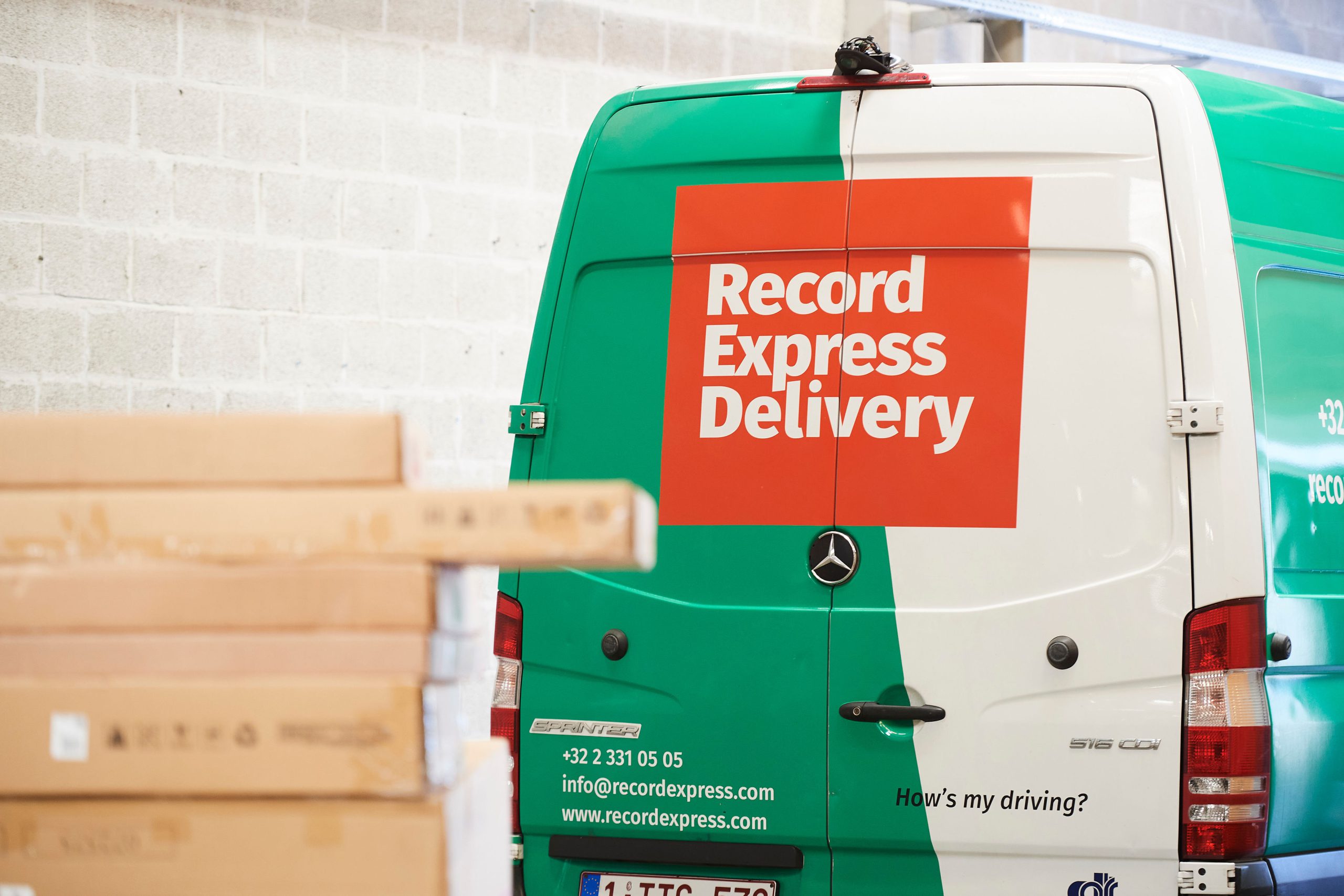
Industrial delivery fleets in Belgium must meet EU and regional safety, emissions, driver hours, and hazardous goods rules. The pillars are roadworthiness inspections, low-emission zone eligibility, tachographs and CPC training, ADR compliance when needed, and correct liability cover. Record Express keeps its own fleet compliant and assigns the right vehicle for each delivery zone so your shipments move legally and safely nationwide.
Related guides:
Last-Mile Logistics in Belgium ·
Eco-Friendly Last-Mile Options ·
AI & Smart Routing ·
Reverse & Returns Management
What regulations actually govern industrial delivery vehicles in Belgium?
Direct answer: Belgium layers EU transport law on top of federal and regional rules. Vehicles must pass periodic roadworthiness inspections, meet Euro emissions standards, respect city low-emission zones, and be operated by licensed drivers who follow EU driving time and rest rules. Documentation, tachographs, and insurance are checked during audits and roadside stops.
Think in three tiers. At EU level you have type-approval and safety frameworks, plus the rules on professional drivers and tachographs. Belgium implements those through federal laws that cover registration, insurance, and roadworthiness, executed by official inspection centers. Regions then add their own access and low-emission conditions in Brussels, Antwerp, Ghent, and other cities. If your fleet operates across all three regions, compliance means matching the strictest of the lot and planning routes and vehicles accordingly. A missed item can ground a truck or trigger a fine, which is why many shippers work with partners who keep the full checklist under control.
- EU legal base: vehicle type and inspection, driver hours, tachographs, and CPC training.
- Belgian layer: roadworthiness via GOCA inspection, registration, insurance, and liability norms.
- Regional layer: low-emission zones and access windows in major cities.
- Audit reality: checks can occur at depots, at roadside, and during tender onboarding.
How do roadworthiness inspections and maintenance logs work?
Direct answer: Heavy goods vehicles require periodic inspections at accredited centers. You must present the vehicle, fix any defects, and keep maintenance records. Skipping or delaying inspections is a common reason for fines and immobilisation at roadside checks.
Belgium’s inspection regime ensures brakes, steering, emissions, lighting, and load security components are safe. Fleets schedule checks in advance, then correct defects and re-present vehicles if needed. The smartest operators link workshop systems to their inspection calendars so reminders fire well before expiry. Each unit carries proof of inspection in the cab and the company stores the digital certificates for audits. If your truck crosses borders, remember that other EU states can view a lapsed inspection as grounds for immobilisation even if you are planning to repair it later in the week.
- Plan inspections on a rolling calendar and avoid bunching entire fleets in one week.
- Archive certificates digitally and attach them to the vehicle record and route plan.
- Integrate pre-trip checks so drivers spot issues before an inspector does.
- Track defect closure time and repeat faults as quality KPIs.
Which emission and low-emission zone rules apply in Belgian cities?
Direct answer: Brussels, Antwerp, and Ghent operate camera-enforced low-emission zones. Older diesel vehicles face restrictions or bans, and future policies tighten these thresholds. Companies need to register vehicles, plan compliant routes, and assign Euro VI or zero-emission vehicles to city cores.
Urban freight is shifting to cleaner fleets. If a truck does not meet the minimum class for a zone, automatic cameras record the plate and a fine follows. The practical approach is to tag each vehicle with its emission class and let the routing plan assign compliant units to jobs within the zones. Where zero-emission corridors are planned, electric vans and smaller rigid trucks take over inner-city legs while larger diesel units stage transfers at city edges. This not only avoids penalties, it often reduces idle time in congestion when paired with smarter delivery windows.
| City/Region | Vehicle rule of thumb | What operators do | Penalty risk |
|---|---|---|---|
| Brussels | Assign Euro VI or electric vehicles | Register plates, schedule compliant units to inner-ring routes | Automatic fines via plate recognition |
| Antwerp | Use Euro VI for central zone, plan zero-emission pilots | Stage transfers at ring, consolidate final legs | Zone cameras and spot checks |
| Ghent | Euro VI or electric for city center | Assign smaller vehicles to narrow streets and timed windows | Registration and camera enforcement |
What driver licensing, CPC, and working-time rules matter day to day?
Direct answer: Drivers need the correct category license, a Certificate of Professional Competence, and must follow EU driving time and rest limits recorded on a tachograph. Employers must train, monitor, and archive the data for audits.
Operationally this means checking the license class before scheduling a route and ensuring CPC is current. Tachographs capture driving and rest periods, with weekly downloads into a secure archive. Dispatchers plan routes that respect 9 hours typical driving per day and insert breaks after four and a half hours at the wheel. Managers review infringements and retrain drivers who repeatedly exceed limits. Consistent discipline protects safety and prevents fines that also put contracts at risk. Renewal cycles and training days are best handled through a shared calendar so coverage stays intact while drivers meet their education requirements.
- License and CPC checks at onboarding and before assigning a heavier vehicle.
- Route plans must include legal breaks and practical rest locations.
- Weekly tachograph download and monthly infringement review.
- Store records for the period required by law and by your customer contracts.
When are ADR hazardous goods rules triggered and what changes then?
Direct answer: Transport of fuels, paints, batteries, chemicals, medical or lab materials often falls under ADR. Vehicles need placards and equipment, drivers need ADR certificates, documentation changes, and the company appoints a Safety Advisor. Packaging and load limits are stricter, and emergency procedures must be onboard.
ADR changes the whole profile of a delivery. You confirm the proper UN numbers, use approved packaging, keep the documents in the cab, and carry the correct fire extinguishers and spill kits. Routes avoid tunnels or restricted streets where required. The receiving site is warned in advance so the right team meets the vehicle. Most problems come from treating an ADR shipment like a normal pallet pickup, which leads to refused loads or penalties. A good practice is to tag ADR in the transport management system at the order stage so ADR-qualified drivers and vehicles are assigned by default and the documents print correctly.
- Classify the goods and pick packaging that is certified for that class.
- Assign ADR-qualified drivers and vehicles with required safety kits.
- Carry written instructions and keep them accessible in the cab.
- Brief the receiving site and confirm unloading procedures.
Which documents and insurances prove you are compliant on the road?
Direct answer: Vehicles carry registration, insurance, and inspection proof. Loads move with a CMR waybill and any required ADR or customs papers. Liability follows the CMR Convention unless your contract sets higher limits. Many tenders require that you show certificates on request.
A tidy cab folder is the simplest way to pass a roadside check. Keep the registration, insurance, inspection certificate, and tachograph calibration handy. For the freight, the CMR waybill should match your transport management system records. If you are carrying ADR goods, include the transport document and written instructions. For cross-border jobs, export or transit declarations travel with the load. On the insurance side, motor and cargo cover are minimums, while some sectors add theft and temperature deviation policies. Keep digital copies on the depot server so customer auditors can verify coverage during onboarding without waiting for emails.
- Registration, insurance, and inspection documents in cab and online archive.
- CMR waybill aligned to the shipment record and customer contract.
- ADR documents and placards when the load qualifies.
- Proof of extra covers if the contract requires higher limits.
How should compliance shape route planning and vehicle assignment?
Direct answer: Assign vehicles by emission class and payload, sequence routes that respect driver hours and city access windows, and choose compliant streets for ADR loads. Build these constraints into your planning tools so every job gets a legal plan automatically.
Dispatchers are busy, so the plan needs to work even on a chaotic day. Tag each vehicle with emission class, ADR status, payload, and inspection due date. Tag each job with city zone, time window, and hazards. Routing then filters the fleet to the units that fit the job and orders the stops so breaks and windows are natural. If a supplier delays a pickup, dynamic resequencing protects legal limits and avoids a snowball of infringements. The best proof that compliance is embedded is when there are fewer emergency calls at the end of the day and fewer exception notes on KPI reports.
- Data-driven assignment prevents human error when days get busy.
- Visibility of legal breaks and windows reduces missed slots.
- ADR routing rules prevent tunnel or zone violations.
- Vehicles with inspections coming due are held back from long trips.
How does Record Express keep fleets compliant while protecting delivery KPIs?
Direct answer: We run our own fleet with compliance built into operations. Vehicles are matched to zones by emission class, ADR jobs go to qualified drivers, and inspections and insurance are tracked centrally. Customers get legal moves without sacrificing on-time performance.
Compliance is not a separate project for us, it is how the work is planned. Our system tracks inspections, CPC renewals, tachograph downloads, insurance certificates, and zone eligibility. Dispatch assigns the right vehicle and driver automatically. If a job requires ADR, the right kit and documents are attached to the load and the receiving site is briefed. In city cores we use the smallest legal vehicles, or electric vans where practical, to meet low-emission rules and tighter delivery windows. We share evidence in weekly reports so your procurement and HSE teams can file audits without chasing anyone.
- Own-fleet control with mixed vehicles for cities and regional routes.
- Central compliance dashboard for vehicles, drivers, and emissions.
- ADR Safety Advisor and trained drivers for regulated goods.
- Proof packs for tenders and audits with certificates and KPI history.
Next step:
Request a fleet compliance check. We will benchmark your inspection, LEZ readiness, driver hours, and ADR status and propose a corrective plan that keeps deliveries on time and within the rules.
FAQ
Do industrial vans need inspection or only trucks?
Light commercial vehicles undergo periodic technical inspections as well. Heavy vehicles have more frequent checks and stricter items, but vans still require proof of roadworthiness and insurance.
Which emission class should we target for Brussels deliveries?
Assign Euro VI or electric vehicles to inner Brussels routes. Register plates on the LEZ portal and keep a list of compliant units in your routing tool.
Are your drivers ADR-certified for hazardous loads?
Yes, we maintain ADR certificates and the safety kits and documents that go with them. We also brief receiving sites before arrival to ensure safe handover.
How do you prove compliance during audits?
We provide inspection certificates, insurance, tachograph and CPC records, LEZ registrations, and ADR documentation in a single digital archive for your auditors.
Sources & Further Reading
- Brussels-Capital Region — Low-Emission Zone (official)
- City of Antwerp — Low-Emission Zone (official)
- City of Ghent — Low-Emission Zone (official)
- GOCA Belgium — Technical Vehicle Inspection
- FPS Mobility — ADR Dangerous Goods Transport
- EU Regulation 561/2006 — Driving time and rest
- EU Directive 2003/59/EC — Driver CPC
- EU Directive 2014/45/EU — Periodic roadworthiness tests
- UNECE — CMR Convention

Record Express was awarded a 59/100 score by EcoVadis, the global leader in sustainability ratings.


