
Eco-Friendly Solutions for Bulky Goods in E-Commerce
SEND PARCELHome / Our Business Areas / Industry / Eco-Friendly Solutions for Bulky Goods in E-Commerce
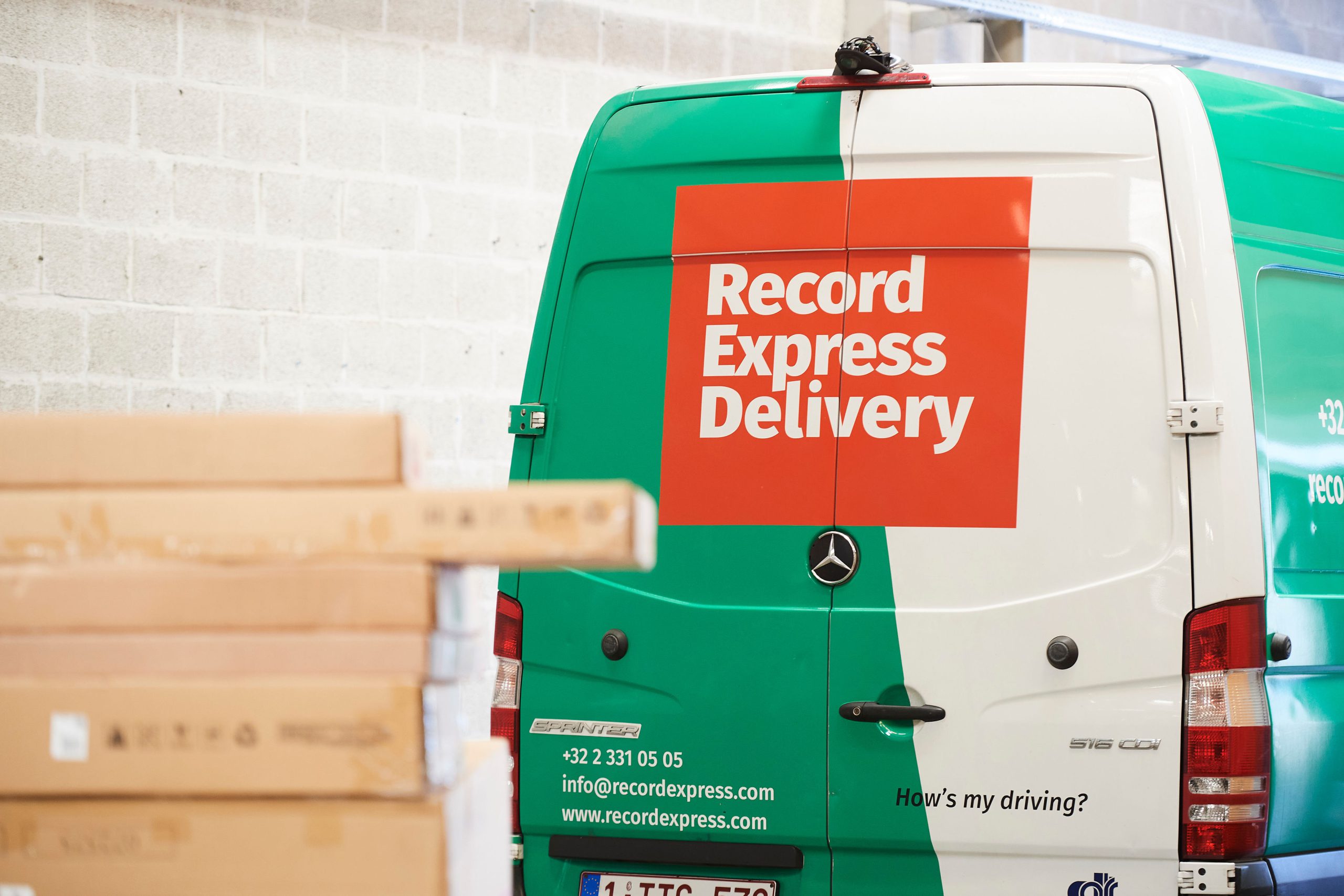
Bulky e-commerce deliveries in Belgium can be greener and cheaper by combining higher load utilisation, right-sized vehicles, fewer failed deliveries, circular packaging, and evidence-based CO₂ reporting.
Start with a 6–8 week audit of delivery attempts, fill rate, returns and packaging waste.
Move repeat lanes to consolidated departures, add appointment scheduling and two-person delivery where needed, standardise returnable packaging, and publish EN 16258 CO₂ per order.
Track four KPIs, cost per stop, first-time success rate, damage rate, and CO₂ per delivery.
Key figures at a glance
Why bulky e-commerce is different for sustainability
Large items, furniture, white goods, exercise equipment, and DIY materials, create more emissions per order than parcels because vehicles carry fewer stops per route and face access restrictions in Belgian cities. Failed deliveries, returns, and damages add avoidable kilometres and waste. The route to greener operations is not a single switch to electric vans, it is a system, better planning, correct vehicle choice, consolidation, durable packaging, and accurate reporting.
High-impact levers and how they cut CO₂ and cost
| Measure | What to do | Impact on CO₂ and cost | Notes for Belgium |
|---|---|---|---|
| Consolidated departures | Group orders to two or three weekly slots per region | Higher trailer fill, fewer trips, lower €/stop | Protect cut-offs and publish ETA windows |
| Appointment scheduling | Customer selects day and 2–4 hour slot by SMS or portal | Fewer failed deliveries and redeliveries | Two-person crews for heavy items |
| Right-sized vehicles | Use vans in dense zones, 12-ton for regional milk runs, artics for trunking | Better fuel or kWh per stop, access to urban sites | Check local access rules when planning electric vans |
| Reusable and recyclable packaging | Switch to returnable blankets, frames, corner guards, and mono-material wraps | Less waste, lower damage claims | Add a return loop or recovery fee |
| Reverse logistics by design | Collect returns, old appliances or furniture on the booked delivery | Avoids extra trips, boosts recycling rate | Publish WEEE and bulky waste guidance |
| Driver eco-routing and training | Optimise routes and coach smooth driving | Lower fuel or energy use, safer handling | Tie bonuses to punctuality and first-time success |
Packaging that protects and reduces waste
- Returnable protection: Reuse blankets, corner boards, stillages, and transit frames. Tag assets, charge a recovery fee if not returned.
- Mono-material design: Choose single-polymer films and paper-based protection so streams are recyclable.
- Right-size principle: Avoid oversize cartons. Use adjustable frames for sofas, beds, and panels.
- Label clarity: GS1 label with SSCC and human-readable SKU. Add handling pictograms to reduce mishandling.
- Proof at load: Take photos after packing and again after load securing. Store with the event log to settle claims quickly.
Operations blueprint for greener bulky delivery
- Audit 6–8 weeks of data, orders, delivery attempts, stop density, fill rate, kilometres, damage, packaging waste.
- Choose service mix, consolidated linehauls to regional hubs, then right-sized vehicles for local two-person delivery.
- Appointment and comms, customer books a slot and gets SMS ETA with live driver link.
- Reverse on the same visit, collect returns and old items, route to repair or recycling.
- CO₂ method, calculate with EN 16258, publish grams CO₂e per delivery and per kilogram.
- Continuous improvement, weekly review of failed deliveries, root causes, and trials of packaging and routing tweaks.
Worked example, Brussels and Antwerp region
A retailer moved from ad-hoc next-day to two weekly consolidated departures, added slot booking, and switched to reusable protection.
Trailer utilisation rose from 46% to 81%. First-time success improved from 88% to 97%.
CO₂ per delivery fell by around 22% based on EN 16258 factors, with transport cost per stop down 17%.
Technology enablers
- Route optimisation and geofencing to reduce empty kilometres and improve punctuality.
- Customer self-serve portals for slot selection and rescheduling, which prevent missed visits.
- Proof-of-delivery with photos to close out orders and cut disputes.
- Asset tracking for returnable packaging and toolkits.
- CO₂ dashboards to publish per-order emissions and track trend lines per lane.
Compliance, recycling and extended responsibility
Belgian and EU rules shape greener operations. Vehicles must meet EU weights and dimensions rules. Producers and retailers handle take-back and recycling duties for certain product streams under extended producer responsibility, for example WEEE for electricals. When hazardous components are present, ADR rules apply to classification, packaging and transport. Reporting needs to be consistent, so adopt one CO₂ calculation method and apply it every month.
| Topic | What to apply | Why it matters |
|---|---|---|
| Weights and dimensions | EU Weights & Dimensions rules for vehicles and loads | Legal access, safe operations, consistent planning |
| Dangerous goods | ADR classification, packaging and documentation | Safety and legal compliance for certain bulky items |
| EPR and WEEE | Producer responsibility, take-back and recycling routes | Higher recovery, fewer separate trips |
| CO₂ measurement | EN 16258, consistent monthly reporting | Comparable figures and credible targets |
KPIs for eco-friendly bulky delivery
| KPI | Target | How to calculate | Notes |
|---|---|---|---|
| CO₂ per delivery | Down quarter on quarter | EN 16258, grams CO₂e per order and per kg | Track by region and service level |
| First-time success | ≥ 95% | Delivered on first attempt over total | Slot booking and ETA messages help most |
| Trailer or van utilisation | ≥ 75% | Shipped cube or weight over capacity | Protect cut-off times for consolidated runs |
| Damage rate | ≤ 1.0% | Claims over deliveries | Returnable protection reduces claims |
| Reuse rate of packaging | ≥ 90% | Assets returned over assets sent | Tag assets and reconcile weekly |
Starter plan, 6–8 weeks
- Collect delivery, returns, and packaging data. Baseline CO₂ with EN 16258.
- Pick one region. Move to two weekly consolidated departures and slot booking.
- Introduce returnable protection and a recovery process.
- Publish four KPIs weekly. Fix the top two root causes of failed deliveries.
- After week eight, roll out to adjacent regions.
Want help to launch a green pilot?
Record Express can design the route plan, set up slot booking and reverse logistics, and implement EN 16258 reporting.
Speak with our team.
FAQ
Is electric the only way to cut emissions for bulky delivery?
No. Consolidation, higher first-time success, right-sized vehicles, and reusable protection usually deliver larger near-term reductions. Electric or HVO then add further gains.
How do we calculate emissions per order?
Use EN 16258. Apply consistent factors to distance and energy use. Report grams CO₂e per delivery and per kilogram, by region and service level.
What about take-back of old items?
Plan reverse logistics on the same visit. Provide recycling instructions and meet WEEE or local bulky waste rules to avoid extra trips.
Can we be green and still offer fast delivery?
Yes. Offer next-day for urgent orders, but encourage booked consolidated days for most customers through pricing or incentives.
What is the quickest win?
Appointment scheduling with live ETA messages. It raises first-time success and reduces redeliveries, emissions, and cost at the same time.
Sources & Further Reading
- European Environment Agency, Greenhouse gas emissions from transport
- European Commission, Sustainable and Smart Mobility Strategy
- Eurostat, Transport statistics database
- European Commission, Weights & Dimensions rules
- EN 16258, Calculation of energy consumption and GHG emissions for transport services
- VIL, Flanders Innovation Cluster for Logistics
Record Express was awarded a 59/100 score by EcoVadis, the global leader in sustainability ratings.


