
How Belgian Businesses Can Reduce Costs on Bulky Freight Deliveries
SEND PARCELHome / Our Business Areas / Industry / How Belgian Businesses Can Reduce Costs on Bulky Freight Deliveries
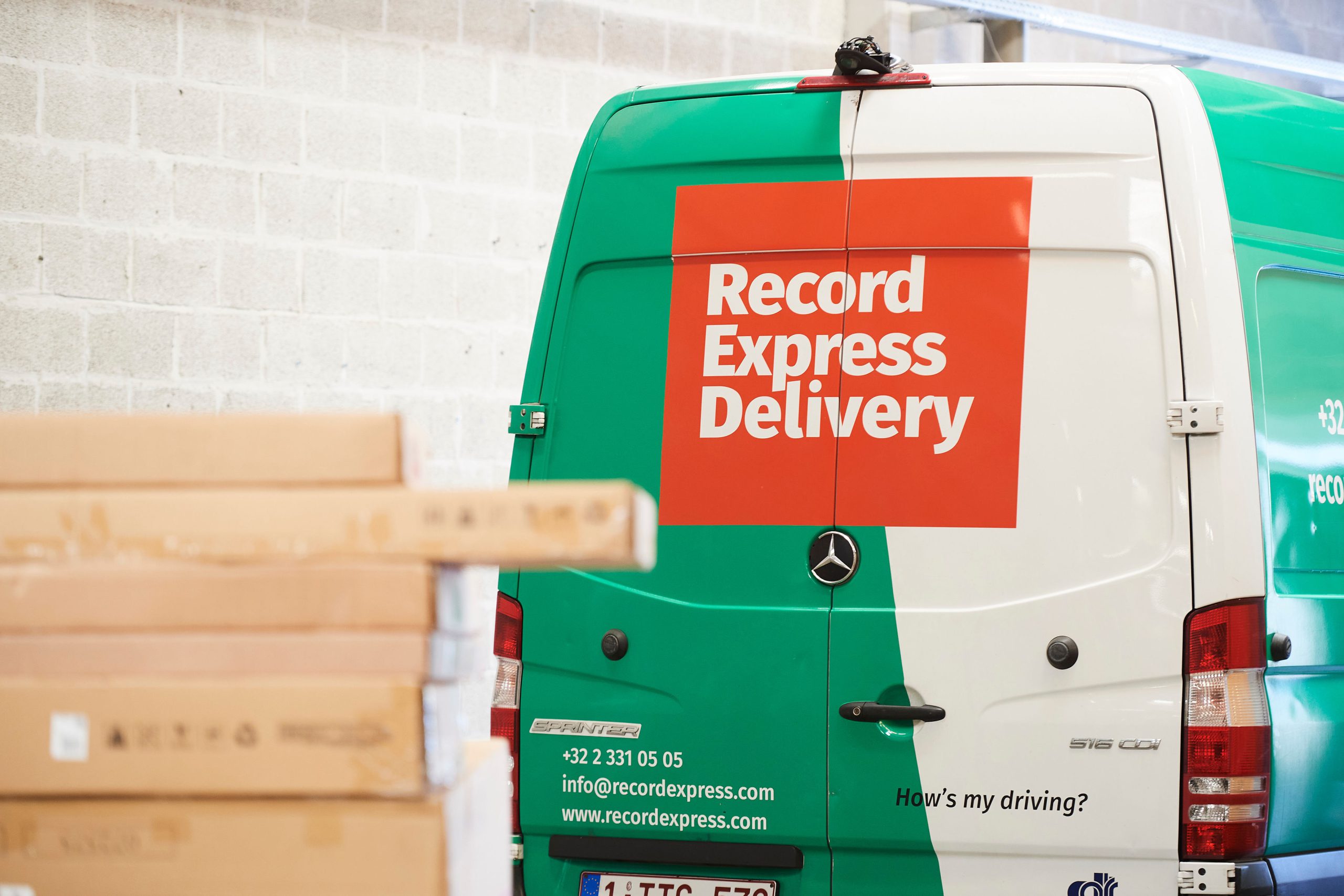
The biggest Belgian freight savings don’t come from shaving cents off the rate. They come from higher first-time success, better vehicle fit for city access, disciplined slotting, and tighter loops that cut empty kilometres. Use this page to benchmark your operation and apply the quick wins.
Jump to: Drivers · Vehicle · Loops · Slots · Pricing · KPIs · Record Express
What really drives the cost of bulky freight in Belgium?
Direct answer: Distance is not the main story. Cost is dominated by first-time delivery success, waiting minutes at docks, mismatch between vehicle and access, and empty kilometres caused by poor loop design. Fix those and the rate takes care of itself.
Belgium’s compact geography means the typical domestic run is short enough that hourly factors outweigh raw fuel burn. If a 12t rigid spends 40 minutes waiting at a congested gate, or if a van must re-attempt tomorrow because a forklift was unavailable, that overhead destroys margin. Conversely, a clean plan—vehicle that fits the site, time window your consignee can actually meet, and a loop that moves clockwise through the city—keeps dwell time low and utilisation high. That is why this guide returns to the same theme: plan for first-time success and protect it with data and discipline.
- First-time success avoids re-attempt miles and extra handling.
- Vehicle/access fit prevents refusals and fines in low-emission zones.
- Slot discipline shrinks waiting minutes and protects driver hours.
- Loop density increases pallets per driver hour, lowering unit cost.
How does vehicle choice and site access shape your costs?
Direct answer: Choose the smallest compliant vehicle that can safely carry the load and reach the consignee. Vans and 3.5t boxes win in Brussels/Antwerp cores; 7.5–12t rigids cover most regional runs; artics pay off on DC corridors. Add tail-lifts or two-person crews when docks are absent or items are bulky.
Vehicle geometry matters. Historic centres restrict length and turning radius. Low-emission zones limit engine class. Retail and office deliveries often lack docks, which makes tail-lifts and pallet trucks essential. Any mismatch here generates waiting time, re-handling, and sometimes fines. A practical fix is to tag each delivery address with access notes (street width, stairs, lift, loading bay, LEZ status) and let planning assign a compatible unit by default. It is a simple table, but it saves hours of avoidable cost every week.
| Scenario | Vehicle | Why it saves money |
|---|---|---|
| Inner-city, narrow streets (LEZ) | Van / 3.5t box with tail-lift | Avoids access refusals and fines; faster kerbside unload |
| Mixed suburban & retail parks | 7.5–12t rigid | Best payload vs maneuverability; fewer trips |
| DC↔DC corridor (steady volume) | Artic FTL | Maximises utilisation and km per pallet |
| Bulky goods, no dock on site | Dedicated rigid + two-person crew | Prevents damage and re-attempts; quicker placement |
Can consolidation and loop routing really cut bulky freight cost?
Direct answer: Yes. Two extra compatible stops on a loop often reduce cost per stop by 10–20 percent without touching rates. The trick is clustering by zone and window and avoiding backtracking across ring roads and rivers.
Belgian metros lend themselves to clockwise or counter-clockwise loops that respect ring traffic. If you plan drops by postcode alone, you will bounce across the same traffic bottlenecks multiple times in a day. Instead, bundle deliveries by access type and area, and stage stock the night before so drivers can roll on time. When loads are heavy but geographically close, consider a micro-cross-dock or shared staging point to build density without adding handling risk. Track empty km as a KPI; if it trends down while on-time performance holds, the plan is working.
- Design loops around ring roads and bridges, not just distance.
- Cluster by delivery window and access constraints (stairs, no dock).
- Stage heavy items nearest their first drop to minimise shunting.
- Measure km per successful stop; aim to trend it down monthly.
Why do slotting and dock discipline beat rate negotiation for savings?
Direct answer: Waiting time and missed windows quietly inflate invoices. A central slot ledger, live ETAs, and symmetrical penalties for early/late arrivals cut dwell time and re-attempts. That drops total cost more than a small rate discount ever will.
Five trucks arriving for a single gate within ten minutes is a planning failure. You pay for drivers to stand still, and later stops suffer. A single slot calendar across warehouses with clear buffers removes that chaos. Share ETA links with consignees and use a gate phone or app for quick triage. When upstream suppliers slip, resequence the loop to protect downstream windows. The fastest visible win for many shippers is to measure “waiting minutes per stop” and attack the outliers with better waves and access prep.
- Publish a slot matrix with buffers; reserve peak waves for priority lanes.
- Share live ETAs; make it easy for sites to confirm readiness.
- Refuse unslotted arrivals during critical waves to protect the day.
- Log root causes for any wait > 20 minutes and fix the SOP, not just the incident.
Which pricing levers lower spend without killing service?
Direct answer: Lock lane tariffs for steady corridors, use a transparent fuel index, and bundle accessorials (tail-lift, two-person) into flat per-stop fees. Keep a small spot allowance for spikes. Predictability earns better rates and fewer disputes.
Chasing the lowest headline rate often backfires. Better to agree a simple two-tier model: contracted core lanes with clear service levels, plus a small spot window for surges. Use an official fuel index to adjust monthly. Bundle the common extras you genuinely need—tail-lift, stairs, two-person crew—so invoices don’t balloon with line items. For bulky goods, paying a little more for a guaranteed two-person crew is cheaper than paying for damage and re-attempts. Keep price discussions focused on cost per successful stop, not theoretical per-km numbers that ignore reality at the dock.
| Lever | How it works | Why it saves |
|---|---|---|
| Lane tariffs | Fixed rate per origin–destination pair | Predictable planning and priority allocation |
| Fuel indexation | Monthly adjuster tied to an official index | Prevents time-consuming re-quotes |
| Bundled accessorials | Flat fee covers tail-lift/two-person/stairs | Fewer billing disputes; faster admin |
| Volume commitments | Reserve capacity weekly on key lanes | Carriers plan crews and pass savings back |
Which KPIs prove your cost programme is working?
Direct answer: Track five numbers weekly: on-time to slot, first-time delivery success, average waiting minutes per stop, damage rate, and cost per successful stop. Review by lane and site; fix causes, not symptoms.
These KPIs reveal where money leaks. On-time to slot protects dock labour. First-time success prevents re-attempts and angry consignees. Waiting minutes flag slotting or access issues. Damage is usually packaging or handling. Cost per successful stop brings it together and aligns purchasing with operations. Make the review short, visual, and focused on actions. Trends beat one-off snapshots, so compare week-over-week and month-over-month.
| KPI | Good looks like | What it tells you |
|---|---|---|
| On-time to slot | ≥ 95% | Route & dock sequencing quality |
| First-time success | ≥ 98% | Access readiness & vehicle fit |
| Waiting minutes/stop | Trending to < 10 | Slot discipline across sites |
| Damage rate | ≤ 1% | Packaging & handling discipline |
| Cost per successful stop | Trending down | Overall plan effectiveness |
How Record Express reduces bulky freight costs without cutting corners
Direct answer: We remove waste first: vehicle/access mismatch, poor slotting, and empty km. Because we operate our own mixed fleet and coordinate slotting, we can resequence routes in real time and protect windows—so you pay for completed deliveries, not retries.
Our model is built for Belgium’s mix of historic cores and regional corridors. We tag addresses with access constraints, assign the smallest compliant vehicle, and plan loops that respect driver-hour rules. Live ETAs and photo proof reduce disputes and claims. Weekly KPI packs show progress on first-time success, waiting minutes, and cost per successful stop. If you are evaluating options, start with a one-lane pilot, measure the numbers above, and keep only what proves itself in the data.
- Own-fleet vans, box vans, 7.5–12t rigids; two-person crews when needed.
- Slot desk aligned to your warehouse waves; resequencing on the day.
- Live ETAs and photo evidence on every delivery.
- Simple pricing: lane tariffs, clear fuel indexation, bundled accessorials.
Quick benchmark: Pull your last 30 bulky deliveries. If re-attempts > 2% or average waiting minutes > 15, your costs will fall with better vehicle fit and slotting—before any rate talk.
FAQ
Is a pallet network always cheaper than dedicated?
No. For fragile or high-value freight into tight city addresses, a dedicated van or rigid with tail-lift is often cheaper once you include the risk of cross-dock damage and re-attempts.
How do low-emission zones affect cost?
LEZ rules restrict older diesels and require registration. Assigning compliant vehicles avoids fines and detours. See the official links in Sources for the current rules.
What’s the fastest way to cut spend this quarter?
Track waiting minutes and first-time success by lane; fix access and slot issues; and adjust vehicle types on the worst lanes. These changes show savings before the next rate cycle.
Can we keep admin costs down?
Yes. Bundle common accessorials into a flat per-stop fee and use a clear monthly fuel index so invoices are predictable and simple to reconcile.
Sources & Official References
- UNECE — CMR Convention (liability for road freight)
- EUR-Lex — Regulation (EC) No 561/2006 on driving time, breaks and rest
- EUR-Lex — Regulation (EU) No 165/2014 on tachographs
- EUR-Lex — Directive 96/53/EC on vehicle weights and dimensions
- FPS Mobility Belgium — ADR (dangerous goods) guidance
- GOCA Belgium — Technical vehicle inspection

Record Express was awarded a 59/100 score by EcoVadis, the global leader in sustainability ratings.


