
Commercial Freight Delivery in Belgium: Options for SMEs vs Corporates
Commercial freight delivery options for SMEs and corporates in Belgium. SEND PARCELHome / Our Business Areas / Industry / Commercial Freight Delivery in Belgium: Options for SMEs vs Corporates
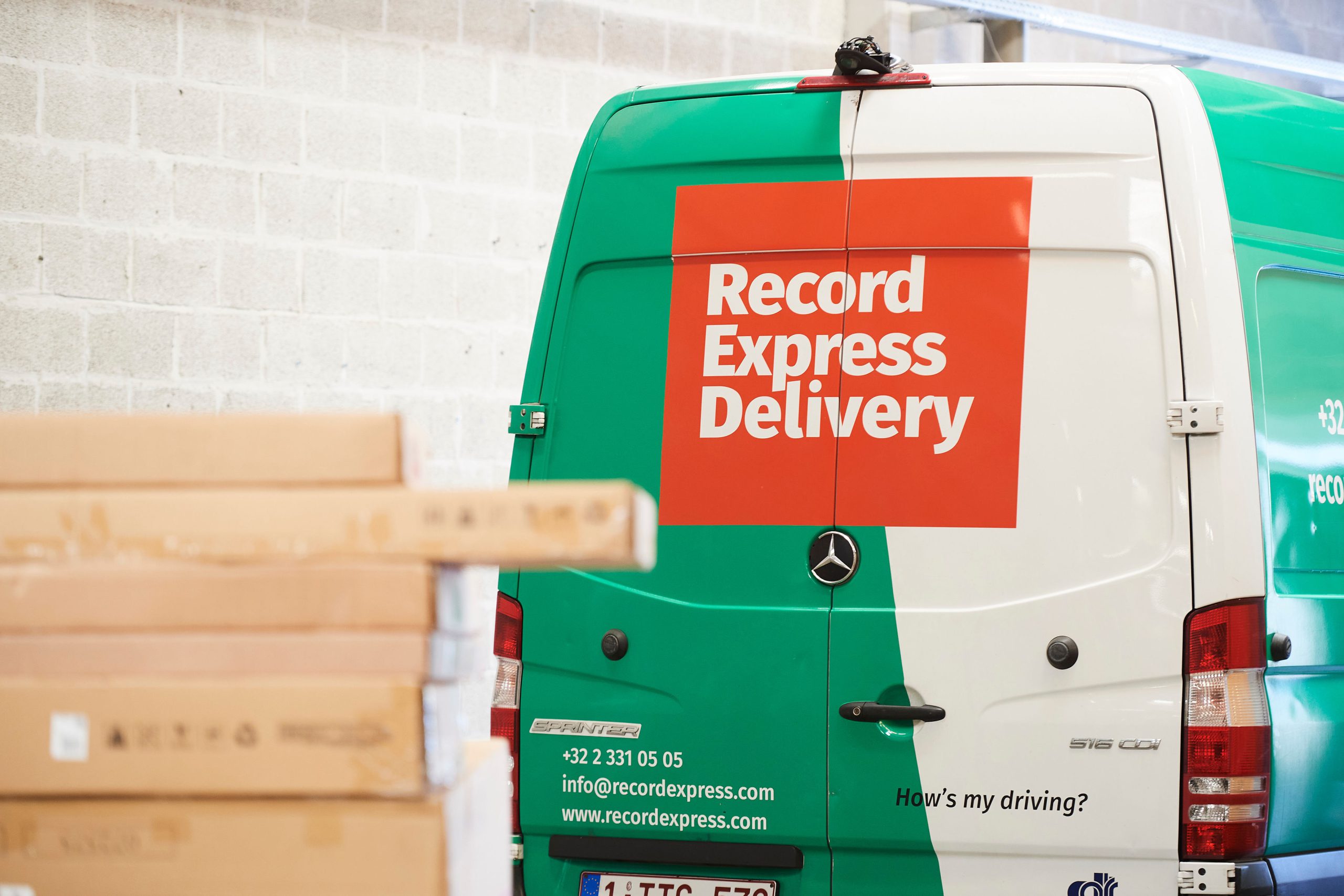
Belgian commercial freight splits into a handful of choices: pallet networks and groupage for small and mid-sized shippers, dedicated FTL for larger or time-critical moves, and specialist last-mile for bulky, high-value, or ADR cargo. The best setup aligns vehicle type, delivery windows, compliance, and price model to your order pattern.
Jump to:
Freight types ·
SMEs vs corporates ·
Vehicles ·
Last-mile bulky ·
Pricing ·
Compliance ·
KPIs ·
Record Express
What commercial freight options exist in Belgium and when should you use them?
Direct answer: Use pallet networks/groupage for 1–6 pallets on flexible timelines, LTL for multi-pallet partial loads with tighter windows, and FTL/dedicated for time-critical, high-value, or fragile cargo. Intermodal and air/sea complements help for long distance or export. Choose based on pallet count, urgency, delivery location, handling needs, and compliance requirements.
Belgium’s location inside the Benelux hub makes it efficient to move freight to and from the Netherlands, France, Germany, and the UK. For domestic and near-cross-border moves, pallet networks and LTL cover most SME needs with predictable transit times. Larger shippers or projects that cannot risk cross-dock handling favor dedicated rigids or artics with direct drive. ADR, temperature sensitivity, or white-glove placement tilt decisions toward specialist carriers and two-person crews. A useful rule is to start with the minimum handling that still meets cost and timing targets, then add services only when risk or product value demands it.
| Option | Best for | Pros | Watch-outs |
|---|---|---|---|
| Pallet network / groupage | 1–6 pallets, flexible delivery | Low cost, daily departures | More handling, limited special services |
| LTL (part load) | 7–18 pallets, regional loops | Good cost-to-speed balance | Tighter booking, access constraints |
| FTL / dedicated | Full trucks, high value, fragile | Direct drive, lowest risk | Higher price if under-utilised |
| Specialist last-mile | Bulky installs, 2-person, Hiab | Placement, proof, fewer re-attempts | Need exact site rules and slots |
How do SMEs and corporates choose differently?
Direct answer: SMEs optimise for simplicity and predictable all-in pricing, often mixing pallet networks with occasional dedicated vehicles. Corporates optimise for scale, KPI control, and risk, with contracted lanes, consolidated waves, chargeback logic, and deeper compliance requirements.
SMEs value a single contact, clear pickup windows, and a straightforward price per pallet or per vehicle. They use flexible service levels and add options such as tail-lift or two-person crews only when needed. Corporates run multi-site warehouses and retail networks, so they favor contracted capacity, slot-based delivery waves, and reporting across lanes and sites. They also integrate compliance rules for low-emission zones, driver hours, ADR, and insurance, then monitor re-attempts and damage as core metrics. The choice is not only about cost. It is about the steady removal of friction points that otherwise create backlogs, returns, or penalties downstream.
| Factor | SME | Corporate |
|---|---|---|
| Typical mix | Pallet network + ad-hoc dedicated | Contracted LTL/FTL + specialist last-mile |
| Scheduling | Pickup window, day-definite | Slot matrix, wave planning |
| Risk tolerance | Accepts some cross-dock handling | Prefers direct drive for fragile/high value |
| Compliance | Basic documentation | LEZ eligibility, ADR, CPC, audit packs |
| Reporting | POD and basic tracking | KPI dashboards, lane reviews |
Which vehicles and handling gear fit Belgian access and payload realities?
Direct answer: Inner-city Belgium favors vans and 3.5t boxes with tail-lift. Most regional runs use 7.5–12t rigids for the balance of payload and geometry. Articulated trucks cover high-volume corridors. Two-person crews, pallet trucks, and lift-assists reduce damage and re-attempts on bulky deliveries.
Brussels Pentagone, Antwerp center, and Ghent’s old town demand small, precise vehicles and reliable time windows. Suburban and industrial parks welcome larger rigids. For high cube or heavy pallets, 12t rigids or artics with disciplined slotting protect dock rhythm. If the destination is a retail store or a site without a dock, tail-lift vehicles and two-person crews prevent failed deliveries. Availability of handling gear is more than convenience. It is the difference between a first-time success and an expensive return loop that ties up inventory and customer service for days.
| Scenario | Vehicle | Notes |
|---|---|---|
| Historic city center | Van / 3.5t box with tail-lift | Tight turns, short windows |
| Retail park / suburban | 7.5–12t rigid | Best mix of payload and access |
| High volume corridor | Artic / FTL | Consolidate by wave to protect docks |
| Bulky or fragile | Dedicated rigid + 2-person crew | Reduce handling, add proof pictures |
How does specialist last-mile change outcomes for bulky or high-value freight?
Direct answer: Specialist last-mile swaps a “drop at curb” for planned placement. Drivers are briefed, equipment is ready, and delivery windows match site access. Result: fewer damages and re-attempts, cleaner handovers, and better customer scores.
Bulky items like machinery, shopfitting, or medical equipment are not just heavy. They are often fragile, expensive, and going into locations with strict access rules. A specialist last-mile plan synchronises time slots, confirms site contacts, and adds proof pictures and sign-off. Two-person crews move items safely with dollies or lift-assists, while tail-lifts bridge the last step from truck bed to ground. That discipline reduces incidental damage and shortens dwell times at destination, which also protects dock schedules and keeps the rest of the network on time.
- Briefings include entry route, lift availability, and PPE on site.
- Photo capture at pickup and delivery simplifies claims.
- Reusable protection reduces damage on high-value goods.
- Resequence on the day to protect tight windows when upstream slips occur.
How is commercial freight priced and what surcharges should you expect?
Direct answer: Expect base rates by pallet, weight, distance, or vehicle, then surcharges for fuel, ADR, waiting, second man, tail-lift, and re-attempts. SMEs usually prefer simple bundled quotes. Corporates adopt lane-based tariffs and SLAs with performance credits and penalties.
Pricing clarity prevents friction. A pallet network quote typically combines zone distance, pallet footprint, and volumetric weight, with fuel and accessorials listed separately. LTL and FTL add per-kilometer or per-trip rates with waiting time and loading rules. Specialist last-mile adds two-person crew time, stairs or long carries, and out-of-hours fees. For longer contracts, predictable fuel indexation protects both parties from price shocks. The goal is not the absolute lowest number. It is the fit between service level and the true cost of first-time success, which is almost always cheaper than re-attempts and damage.
| Charge | When it applies | Why it exists |
|---|---|---|
| Fuel index | Monthly, linked to official index | Pass-through for fuel price volatility |
| Waiting time | After free minutes at dock/site | Protects route schedule |
| Tail-lift / 2-person | No dock or heavy/awkward items | Covers equipment and additional labor |
| ADR / temp control | Regulated or temperature-sensitive loads | Compliance and specialist equipment |
| Re-attempt | Site closed, wrong vehicle, refused | Covers double handling and miles |
What compliance rules affect commercial freight choices?
Direct answer: Freight decisions sit inside law: vehicle dimensions and weights, driver hours and tachographs, low-emission zones in major cities, ADR for dangerous goods, and CMR liability for road transport. Build these constraints into planning, not as afterthoughts.
Belgium follows EU vehicle dimension and weight rules that govern what a truck may carry and where. Professional drivers follow EU driving time and rest limits, recorded by tachograph. City low-emission zones restrict older diesels and require registration. ADR sets strict packaging and documentation for hazardous loads. The CMR Convention sets liability limits per kilogram unless contracts specify higher cover. Compliant plans reduce the chance of a roadside immobilisation or a refused delivery. When in doubt, tag jobs that might need ADR or LEZ checks and resolve them before dispatch, not on the curb.
- Dimensions and weights define vehicle choice and consolidation potential.
- Driver hour limits shape feasible daily loops and wave plans.
- LEZ eligibility assigns the right vehicle to inner-city routes.
- ADR changes packaging, equipment, and driver certification.
- CMR liability influences insurance and customer Ts&Cs.
Which KPIs and SLAs keep freight predictable and fair?
Direct answer: Track on-time to slot, first-time delivery, damage rate, re-attempt rate, and cost per successful stop. Align SLAs to these outcomes and review weekly by lane. Scorecards expose bottlenecks and allow shared fixes that lower total cost.
KPIs are not only for large shippers. SMEs benefit from the same visibility at smaller scale. On-time to slot protects labor planning for warehouses and retail stores. First-time success avoids re-attempt miles and customer churn. Damage rates reflect packaging and handling discipline. Re-attempts tell you where access rules or vehicle selection are off. Cost per successful stop gives the true picture of value, not headline rates that hide hidden work. A clean scorecard with comments and actions keeps both sides honest and nudges cost down over time without cutting corners on safety or legality.
- On-time to slot ≥ 95 percent for scheduled docks.
- First-time delivery ≥ 98 percent across lanes.
- Damage rate ≤ 1 percent with photo proof.
- Re-attempts ≤ 2 percent, tracked with reason codes.
- Cost per successful stop as the core commercial KPI.
Where does Record Express fit in Belgian commercial freight?
Direct answer: Record Express runs own-fleet last-mile and regional freight with mixed vehicles, two-person crews, and specialist handling for bulky, fragile, or ADR-sensitive goods. We plan with slots and compliance first, then execute with photo proof and live ETAs to keep KPIs tight for both SMEs and corporates.
Our approach is simple. We select the smallest compliant vehicle that meets payload and access needs, schedule it to a legal and practical plan, and brief the driver on the site specifics. Photo capture protects both sides on condition, and live ETAs lower the chance of missed windows. For SME customers this means a single accountable partner who can scale up services when needed. For corporates it means consistent execution across sites with the reporting and compliance evidence that procurement and HSE teams expect. The result is fewer surprises, fewer re-attempts, and steadier cost per successful stop.
- Own-fleet control, mixed vehicles, and two-person options.
- ADR-capable equipment and trained drivers where required.
- Slot-based planning with resequencing when upstream slips occur.
- Evidence packs: photos, timestamps, and delivery notes on file.
Want a quick benchmark? Map your last 30 bulky deliveries against these KPIs. If re-attempts exceed 2 percent or photos are missing on claims, you are leaving money on the table.
FAQ
Should we use a pallet network or go dedicated?
If the freight tolerates cross-dock handling and your windows are flexible, pallet networks are cost-effective. If items are fragile, high-value, or time-critical, go LTL or FTL dedicated to reduce touches and risk.
Can two-person crews and tail-lifts be booked for retail stores?
Yes, and they are often the difference between first-time success and an expensive return. Book them up front if there is no dock or if stairs or tight turns are involved.
Do you handle ADR freight inside Belgian cities?
Yes, with ADR-qualified drivers, the correct safety kits and documentation, and routes that respect local tunnel and access rules.
How do we keep cost predictable over the year?
Use lane-based tariffs with fuel indexation, standardise accessorial rules, and run monthly KPI reviews. Predictability beats chasing a headline rate that generates re-attempts.
Sources & Further Reading
- UNECE — CMR Convention (international road carriage liability)
- EU Directive 96/53/EC — Weights and dimensions of road vehicles
- EU Regulation 561/2006 — Driving time, breaks, and rest
- EU Regulation 165/2014 — Tachographs in road transport
- FPS Mobility Belgium — ADR Dangerous Goods Transport
- GOCA Belgium — Technical vehicle inspection

Record Express was awarded a 59/100 score by EcoVadis, the global leader in sustainability ratings.


