
How to Manage Multi-Site Deliveries Across Belgian Warehouses
How to manage multi-site deliveries across Belgian warehouses. SEND PARCELHome / Our Business Areas / Industry / How to Manage Multi-Site Deliveries Across Belgian Warehouses
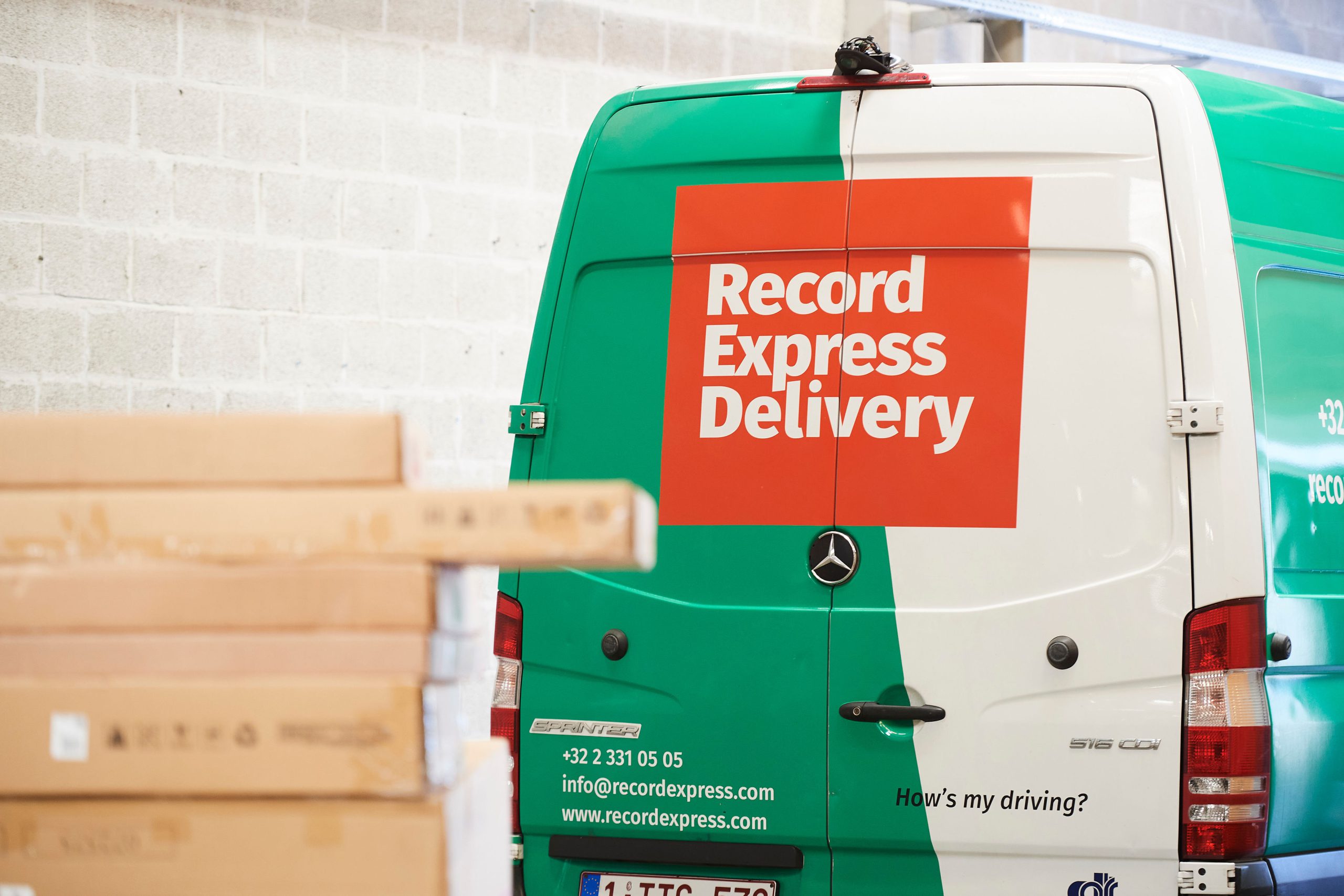
A high performing Belgian warehouse network runs on a single slot ledger, standardized shipping rules, and one accountable last-mile partner. Unify time slots and labeling, route with AI-assisted planning, and keep chain of custody in your own ecosystem to reduce idle labor, stockouts, and re-attempts. Record Express coordinates multi-site slotting, runs an own-fleet last mile, and provides live ETAs, photo proof, and issue resolution across Belgium:contentReference[oaicite:0]{index=0}:contentReference[oaicite:1]{index=1}.
Related hubs and guides:
Last-Mile Logistics in Belgium ·
AI & Smart Routing ·
Returns and Reverse Logistics ·
Urban Delivery in Brussels, Antwerp, Ghent ·
Delivery Regulations in Belgium:contentReference[oaicite:2]{index=2}
Why do multi-site Belgian warehouse networks break down without standardisation?
Direct answer: Site-by-site rules create chaos. Standardising slot windows, labels, packaging, and carrier handoffs cuts missed ETAs, reduces dock idle time, and improves inventory accuracy across the network. Centralise control and measure first-time delivery to fix the flow:contentReference[oaicite:3]{index=3}.
Belgian networks often include a national DC plus city satellites in Brussels, Antwerp, Liège, and Ghent. If each location uses different booking forms, labels, and cut-offs, carriers cannot plan coherent routes and stores cannot plan labor. A single playbook with one slot ledger, identical ASN and label rules, and unified escalation channels aligns operations and reduces rework. Record Express supports network-wide SOPs and runs delivery with our own fleet to keep custody tight from dock to door:contentReference[oaicite:4]{index=4}.
- One slot ledger per network, not per site.
- Uniform cut-offs and label syntax to remove guesswork.
- Single escalation path for late trucks and exceptions.
- KPIs that matter network-wide, not only per site performance.
What is the simplest operating model for multi-site slotting and gate control?
Direct answer: Run a centralised slot desk with local gate marshals. Pre-book fixed windows by lane, protect peaks with buffers, and publish a single contact tree for all warehouses. Use live ETAs and refuse unslotted arrivals during peak waves:contentReference[oaicite:5]{index=5}:contentReference[oaicite:6]{index=6}.
Create a shared calendar for all docks. Split the day into repeatable waves for store replenishment, e-commerce, and inter-site shuttles. Gate marshals verify paperwork, PPE, and pallet counts, then release vehicles in order. Record Express provides live driver ETAs and SMS alerts so sites can stage labor to the wave. When a vehicle slips, central control resequences the route to protect critical windows across the network:contentReference[oaicite:7]{index=7}.
| Wave | Window | Primary Flow | Rules |
|---|---|---|---|
| Morning | 06:30–10:30 | Store replenishment | No unslotted trucks; 15 min buffers per 3 slots |
| Midday | 11:00–14:00 | Inter-site shuttles | Dock 2 reserved for shuttles only |
| Afternoon | 14:30–18:30 | E-commerce and B2B drops | Priority to metro stores; live ETA required |
How do you design lanes and choose the right vehicles for Belgian geography?
Direct answer: Build lanes around metro density and ring-road constraints. Use vans and 3.5t boxes for inner cities, 7.5t to 12t rigids for mixed suburban runs, and reserve artics for high volume corridors. Lock vehicle profiles into your slot playbook to avoid refusals:contentReference[oaicite:8]{index=8}.
Belgium’s short distances favor multi-stop loops. Brussels Pentagone and Antwerp center need smaller vehicles and time-window discipline, while Brabant and Limburg accept larger rigids. Record Express operates a mixed own-fleet and assigns the smallest compliant vehicle to protect access, emissions rules, and on-time performance. Standard vehicle coding in ASNs helps docks prepare the right equipment for unloading:contentReference[oaicite:9]{index=9}.
| Lane Type | Typical Vehicle | Notes |
|---|---|---|
| Brussels inner city | Van or 3.5t box with tail-lift | Tight turns, low emission rules, short slots |
| Antwerp ring and suburbs | 7.5t or 12t rigid | Balance payload with maneuverability |
| Liège corridor | 12t rigid or artic | High volume corridor, consolidate where possible |
Which data and systems keep multi-site deliveries predictable?
Direct answer: Use a single truth for orders, slots, and ETAs. Clean ASNs, standard labels, and real-time tracking feed AI-assisted routing and dock planning. Measure first-time delivery, on-time to slot, and re-attempt rate at network level:contentReference[oaicite:10]{index=10}:contentReference[oaicite:11]{index=11}.
Set required EDI fields for every shipment. Enforce label standards that encode site codes, door numbers, temperature needs, and service levels. Share live ETAs with stores through a simple link and capture photo proof of delivery. Record Express provides an own-fleet tracking portal with client access, so planners and store managers see the same reality without intermediaries complicating the chain of custody:contentReference[oaicite:12]{index=12}.
How can AI-assisted routing improve cost and service across sites?
Direct answer: AI routing turns a daily puzzle into sequenced waves that respect slots, vehicle constraints, and city rules. Expect fewer miles, fewer late arrivals, and higher first-time success when the algorithm and the slot desk work together:contentReference[oaicite:13]{index=13}.
AI models optimise stop order, pick the smallest compliant vehicle, and suggest consolidation opportunities. The slot desk clears exceptions and enforces rules. Record Express combines smart routing with live operator control, which allows same-day resequencing when a supplier runs late or a store requests a swap. The result is a steady dock rhythm and fewer urgent re-attempts.
- Optimise by time windows and service level, not only by distance.
- Auto-flag oversized or restricted street access before dispatch.
- Resequence mid-route to protect peak waves if an upstream slip occurs.
- Log algorithm savings: miles avoided, time saved, and re-attempts reduced.
What network KPIs should larger SMEs and corporates track?
Direct answer: Track on-time to slot, first-time delivery rate, re-attempts, dock idle minutes, and cost per successful stop. Review weekly by lane and site to spot systematic issues, then correct with SOP or capacity changes:contentReference[oaicite:14]{index=14}.
Per-site dashboards are not enough. Review lane heatmaps and identify routes that miss slots more than 5 percent of the time. Link KPI trends to root causes like inconsistent labeling, excessive vehicle sizes, or unrealistic cut-offs. Record Express reports network KPIs and attaches evidence like photos and timeline events so your teams can fix causes, not symptoms:contentReference[oaicite:15]{index=15}.
| KPI | Target | Why it matters |
|---|---|---|
| On-time to slot | ≥ 95% | Protects labor and dock rhythm |
| First-time delivery rate | ≥ 98% | Avoids re-attempts and stockouts |
| Re-attempt rate | ≤ 2% | Signals data or slotting problems |
| Dock idle minutes per wave | Trending to zero | Shows sequencing quality |
How do you manage returns and inter-site transfers without clogging docks?
Direct answer: Separate forward waves from returns, use labelled cages or pallets, and manifest every return with reason codes. Run inter-site shuttles in off-peak windows and avoid mixing them with store deliveries in the same dock wave:contentReference[oaicite:16]{index=16}.
Returns and transfers can paralyse docks if mixed with peak inbound. Assign a fixed afternoon window for returns, require scannable labels, and stage cages near the dock. Inter-site moves should follow standard lane schedules with simple paperwork to keep inventory accurate. Record Express operates defined reverse windows and shares reconciliation files for finance and stock control.
- Reason codes help identify defective packaging or chronic pick errors.
- Do not allow returns to ride along in peak replenishment waves.
- Daily reconciliation of returns against manifests prevents finance drift.
Where do sustainability and compliance fit in multi-site delivery decisions?
Direct answer: Choose compliant vehicles for low emission areas, reduce re-attempts through slot discipline, and consolidate compatible loads. Sustainability and compliance improve when waste miles and idle time go down:contentReference[oaicite:17]{index=17}.
Belgian cities increasingly apply environmental rules. EVs and right-sized vehicles for inner cities, plus route consolidation, reduce emissions without hurting service. Record Express can propose EV or low emission options in applicable lanes and reports CO₂-aligned metrics alongside delivery KPIs.
- Use EV or smaller vehicles for tight cores where feasible.
- Consolidate compatible orders to cut miles and dock cycles.
- Monitor re-attempt causes and eliminate them with data fixes.
How does Record Express run multi-site warehouse programs end to end?
Direct answer: We set up a single slot ledger, unify labels and cut-offs, and deliver with our own fleet. You get live ETAs, photo proof, and one accountable team coordinating across all Belgian sites:contentReference[oaicite:18]{index=18}:contentReference[oaicite:19]{index=19}.
We start with a short network diagnostic, map lanes and waves, and publish a standard operating playbook. Our planners operate the slot desk, assign vehicles that fit each site, and resequence deliveries in real time if conditions change. Because we do not hand freight to intermediaries, chain of custody is clear, and issues are resolved quickly with a single call.
- Single point of contact and escalation for all sites.
- Own fleet with mixed vehicles to match urban and suburban access.
- Live tracking and evidence for every stop, stored centrally.
- Weekly KPI review by lane and per site with action items.
Next step: Book a multi-site delivery audit. We will benchmark your slots, labels, and lanes and run a two-week pilot with KPIs.
FAQ
Can you coordinate deliveries across our DC and four regional warehouses?
Yes. We operate a central slot desk and run our own fleet across Belgium, giving you one team, one ledger, and consistent KPIs across all sites:contentReference[oaicite:20]{index=20}.
Do you provide live ETAs and photo proof to stores?
Yes. Stores receive a link to live ETAs, and we capture photo proof at delivery for accurate reconciliation and claims handling:contentReference[oaicite:21]{index=21}.
How do you handle late upstream suppliers that risk missing waves?
We resequence routes in real time, protect peak waves, and escalate immediately to central control so sites can adjust labor and docks:contentReference[oaicite:22]{index=22}.
Can you support low emission zones and tight inner-city access?
Yes. We choose compliant vehicles and plan short, precise windows for urban cores, in line with local regulations:contentReference[oaicite:23]{index=23}.
Sources & Further Reading
- Record Express – Transfer Pack: execution rules, service model, KPIs:contentReference[oaicite:24]{index=24}
- Last-Mile Logistics Hub Strategy – Belgium: internal linking targets and AI-friendly format:contentReference[oaicite:25]{index=25}
- SEO Content Strategy for Record Express: own-fleet, no intermediaries, multi-language operations:contentReference[oaicite:26]{index=26}

Record Express was awarded a 59/100 score by EcoVadis, the global leader in sustainability ratings.


