
Optimising Forklift & Pallet Transport in Belgium's B2B Supply Chain
Optimising pallet and forklift transport in Belgian supply chains. SEND PARCELHome / Our Business Areas / Industry / Optimising Forklift & Pallet Transport in Belgium’s B2B Supply Chain
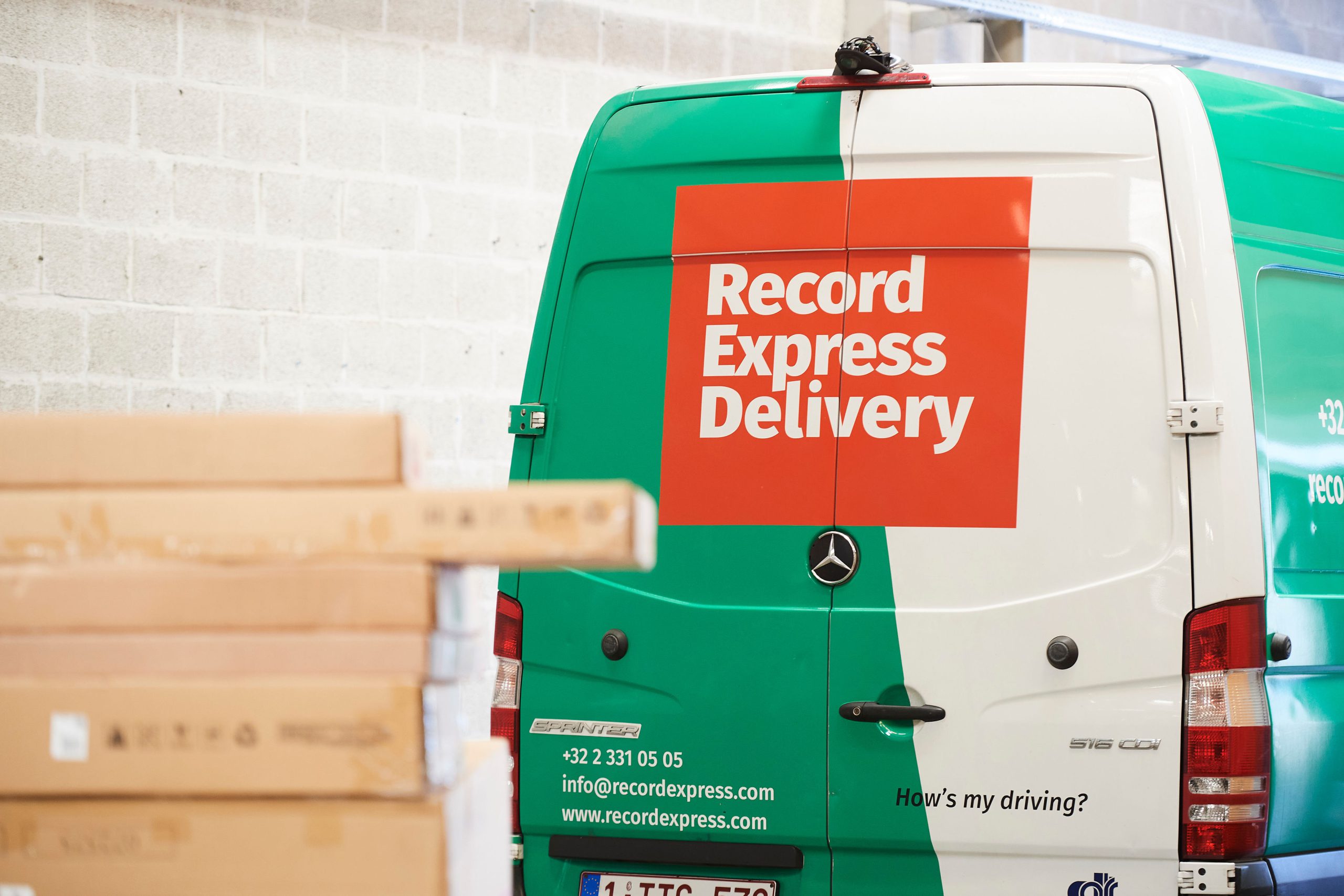
Belgian supply chains run on pallets and forklifts, but efficiency depends on more than equipment. Success comes from harmonised pallet standards, safe forklift operations, smart routing, and a last-mile partner who manages custody from warehouse to customer dock. Record Express operates palletised transport across Belgium, offers own-fleet forklift handling, and integrates compliance with EU safety rules:contentReference[oaicite:0]{index=0}:contentReference[oaicite:1]{index=1}.
Related insights:
Last-Mile Logistics in Belgium ·
Reverse Logistics & Returns ·
AI & Smart Routing ·
Eco-Friendly Last-Mile Options
Why are pallets and forklifts the backbone of Belgian B2B supply chains?
Direct answer: Pallets and forklifts enable standardised, fast, and safe handling of heavy goods. Over 80% of Belgium’s B2B freight is palletised, and efficient forklift use reduces labor, damage, and delays across warehouses, docks, and last-mile delivery:contentReference[oaicite:2]{index=2}.
Belgium’s manufacturing, retail, and industrial hubs depend on palletised transport. Standard EUR-pallets (1200x800mm) and ISO-pallets (1200x1000mm) allow easy transfers between suppliers, warehouses, and retailers. Forklifts—whether electric in warehouses or diesel in yards—cut manual handling time, improve worker safety, and reduce product damage. However, inefficiency arises when pallet standards vary, documentation is inconsistent, or forklift scheduling clashes with delivery slots. Harmonisation and discipline are critical to maintain dock rhythm and keep Belgian supply chains lean:contentReference[oaicite:3]{index=3}.
- Standardisation: EUR and ISO pallets dominate Belgian logistics.
- Forklift safety: EU compliance requires operator training and annual checks.
- Efficiency: Palletised flows cut loading/unloading from 40 minutes to 10–15 minutes per truck.
- Risk: Non-standard pallets or poor forklift practices create bottlenecks.
What pallet standards and regulations apply in Belgium?
Direct answer: Belgium primarily uses EUR-pallets (EPAL) and ISO-pallets, both aligned to European standards. Wood packaging must meet ISPM-15 for cross-border trade, and companies must comply with EU load stability rules:contentReference[oaicite:4]{index=4}.
EUR-pallets are the gold standard across Belgian warehouses and retailers. They ensure interoperability across borders and are recognised by customs. ISO-pallets are common for exports and imports with global partners. Beyond sizing, pallets must be strong, undamaged, and marked with EPAL or ISPM-15 stamps if crossing EU borders. Stability is also regulated: loads must be shrink-wrapped, strapped, or otherwise secured under EU EN 12195-1. Non-compliance can result in fines or rejected deliveries at customer docks. Record Express verifies pallet quality before pickup, reducing failed deliveries and disputes:contentReference[oaicite:5]{index=5}.
| Pallet Type | Dimensions | Common Use | Compliance Notes |
|---|---|---|---|
| EUR-pallet (EPAL) | 1200 x 800 mm | Retail, warehousing, B2B in Belgium/EU | Must show EPAL marking; widely exchangeable |
| ISO-pallet | 1200 x 1000 mm | Export/import, industrial goods | Often required for global container loads |
| ISPM-15 treated | Varies | Cross-border wood packaging | Heat treated, marked for phytosanitary compliance |
How do forklifts drive efficiency in Belgian pallet transport?
Direct answer: Forklifts cut manual handling, reduce damage, and speed up dock turns. Electric forklifts dominate warehouses for sustainability, while diesel/lpg units handle outdoor yards. EU rules require training, PPE, and annual checks for safety:contentReference[oaicite:6]{index=6}.
Every palletised load in Belgium eventually meets a forklift. In warehouses, electric forklifts and reach trucks ensure rapid put-away and retrieval. On yards and construction sites, diesel or LPG units provide outdoor power. Forklift scheduling aligned with delivery slots is crucial: one delayed forklift can idle a truck for an hour. Operator training and machine maintenance reduce accidents, which otherwise cause downtime and cost. Record Express coordinates forklift resources with dock calendars to keep pallet flows predictable:contentReference[oaicite:7]{index=7}.
- Dock-to-dock efficiency: forklift availability determines truck turnaround.
- Operator compliance: Belgian law requires certified training for forklift drivers.
- Safety: load stability and PPE enforcement reduce workplace incidents.
- Sustainability: electric forklifts lower emissions and noise in warehouses.
What role does AI routing play in pallet and forklift logistics?
Direct answer: AI-assisted routing sequences pallet deliveries around slots, forklift availability, and city rules. It reduces wasted miles, dock idle time, and forklift clashes:contentReference[oaicite:8]{index=8}.
AI tools optimise transport by factoring in delivery time windows, pallet counts, and forklift availability at each site. By integrating real-time data, the system avoids scheduling two high-volume trucks at the same dock simultaneously. Record Express uses AI routing alongside a central slot desk to dynamically resequence deliveries when upstream suppliers slip. This ensures forklifts and palletised loads are processed without bottlenecks in Brussels, Antwerp, or Ghent:contentReference[oaicite:9]{index=9}.
- Optimises pallet loops across Belgian metro hubs.
- Protects forklift scheduling by staggering truck arrivals.
- Resequences routes mid-day to avoid late arrivals.
- Logs cost savings in miles and idle minutes avoided.
Which KPIs track pallet and forklift performance?
Direct answer: The core metrics are: truck turnaround time, pallets per hour per forklift, damage rate, and first-time delivery success. Belgian corporates also log CO₂ per pallet moved:contentReference[oaicite:10]{index=10}.
KPIs align logistics teams and reveal bottlenecks. Turnaround time reflects dock rhythm. Pallets/hour per forklift measures productivity. Damage rate shows handling discipline. First-time delivery success highlights the integration of pallet quality, forklift readiness, and route planning. Record Express reports these KPIs per site and per lane, supporting continuous improvement in Belgian supply chains:contentReference[oaicite:11]{index=11}.
| KPI | Target | Why it matters |
|---|---|---|
| Truck turnaround | ≤ 30 minutes avg. | Protects slot discipline |
| Pallets/hour per forklift | ≥ 25 | Measures forklift productivity |
| Damage rate | ≤ 1% | Protects asset value |
| First-time delivery success | ≥ 98% | Avoids re-attempts and costs |
How do sustainability and safety shape pallet and forklift choices?
Direct answer: Choose reusable pallets, enforce forklift safety, and use electric equipment in city warehouses. Sustainable pallet and forklift operations cut waste, emissions, and accidents:contentReference[oaicite:12]{index=12}.
Belgium’s logistics operators face rising sustainability and safety expectations. Pallet reuse reduces waste. EV forklifts cut CO₂ and noise. Forklift operator training prevents accidents that otherwise idle docks and raise insurance costs. Record Express integrates sustainability into operations, offering eco-friendly pallet loops and electric forklifts in urban warehouses, while maintaining safety compliance across sites:contentReference[oaicite:13]{index=13}.
- Reusable pallets reduce wood waste and disposal costs.
- EV forklifts suit city warehouses in Brussels, Antwerp, Ghent.
- Operator training and PPE reduce injury risk.
- Reporting CO₂ per pallet moved meets ESG expectations.
How does Record Express run pallet and forklift logistics for Belgian clients?
Direct answer: We unify pallet standards, align forklift resources, and deliver with our own fleet. Clients get live ETAs, photo proof, and compliance with EU safety and sustainability rules:contentReference[oaicite:14]{index=14}:contentReference[oaicite:15]{index=15}.
Record Express maps pallet flows, designs SOPs, and assigns vehicles that fit dock geometry and load profiles. Forklifts are scheduled with delivery slots, and operators are trained and certified. We provide clients with live ETAs, photo proof, and weekly KPI reports. Because our chain of custody has no intermediaries, accountability is clear, and operations remain predictable across Belgium’s B2B supply chain.
- Single SOP for pallet and forklift operations across sites.
- Own fleet with right-sized vehicles for docks and cities.
- Live tracking and photo proof for every delivery.
- KPIs and CO₂ reporting included in client dashboards.
Next step: Request a pallet logistics audit. We will benchmark your turnaround, forklift productivity, and damage rates and run a pilot program.
FAQ
Do you supply forklifts at delivery sites?
Yes. We coordinate forklift availability and provide trained operators when required for last-mile pallet drops:contentReference[oaicite:16]{index=16}.
Can you manage both EUR and ISO pallets?
Yes. We handle both standards and verify quality before pickup to prevent rejections at docks:contentReference[oaicite:17]{index=17}.
Do you offer CO₂ reporting per pallet moved?
Yes. We log emissions and report CO₂ per pallet in line with EU ESG frameworks:contentReference[oaicite:18]{index=18}.
Can you resequence pallet deliveries in real time?
Yes. Our AI routing and slot desk allow resequencing mid-day to avoid bottlenecks and idle forklifts:contentReference[oaicite:19]{index=19}.
Sources & Further Reading
Record Express was awarded a 59/100 score by EcoVadis, the global leader in sustainability ratings.
